In short
In 2026, a FOOH campaign (fake out-of-home) produced by a studio sits between €4,000 for a simple test and €200,000 for a brand platform rolled out across several cities. The heart of the market, a custom-modeled hero object, a real-world shot filmed on location and a finish that holds the second of illusion, sits between €10,000 and €40,000. Offers at €2,000 or €3,000 do exist, from freelancers or in generative video: they do not buy the same thing. Almost the entire budget goes into creation: unlike billboards, there is no media space to rent.
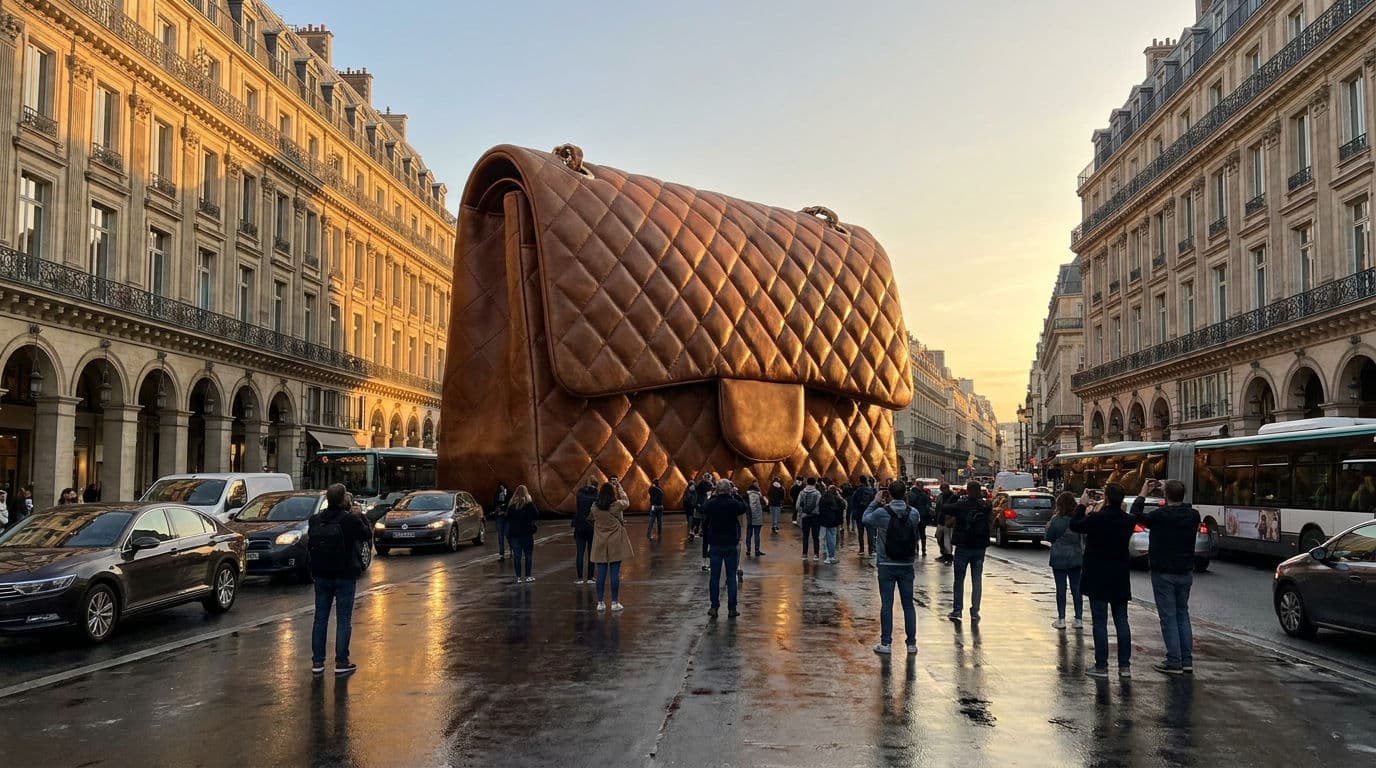
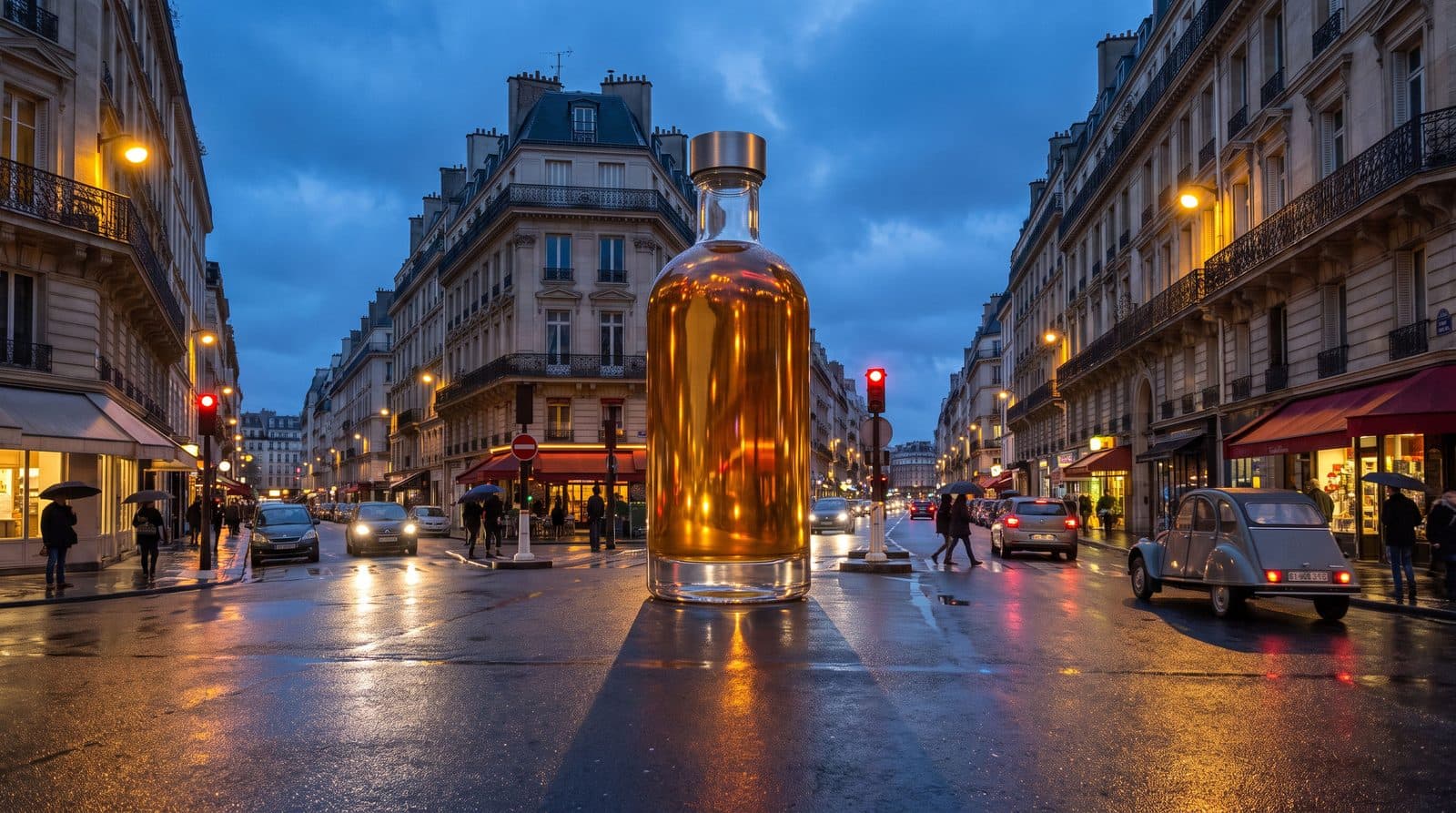
Ask for three FOOH quotes next week. You will get back €4,000, €20,000 and €70,000. For what looks like the same thing: a twelve-second vertical video in which a giant object erupts into a street.
This is not opportunism. It is that the word “FOOH” covers three different crafts, all sold under one name. Here is how to read a quote, what each euro actually buys, and the return calculation almost nobody runs before signing.
The Seven Line Items on a FOOH Quote
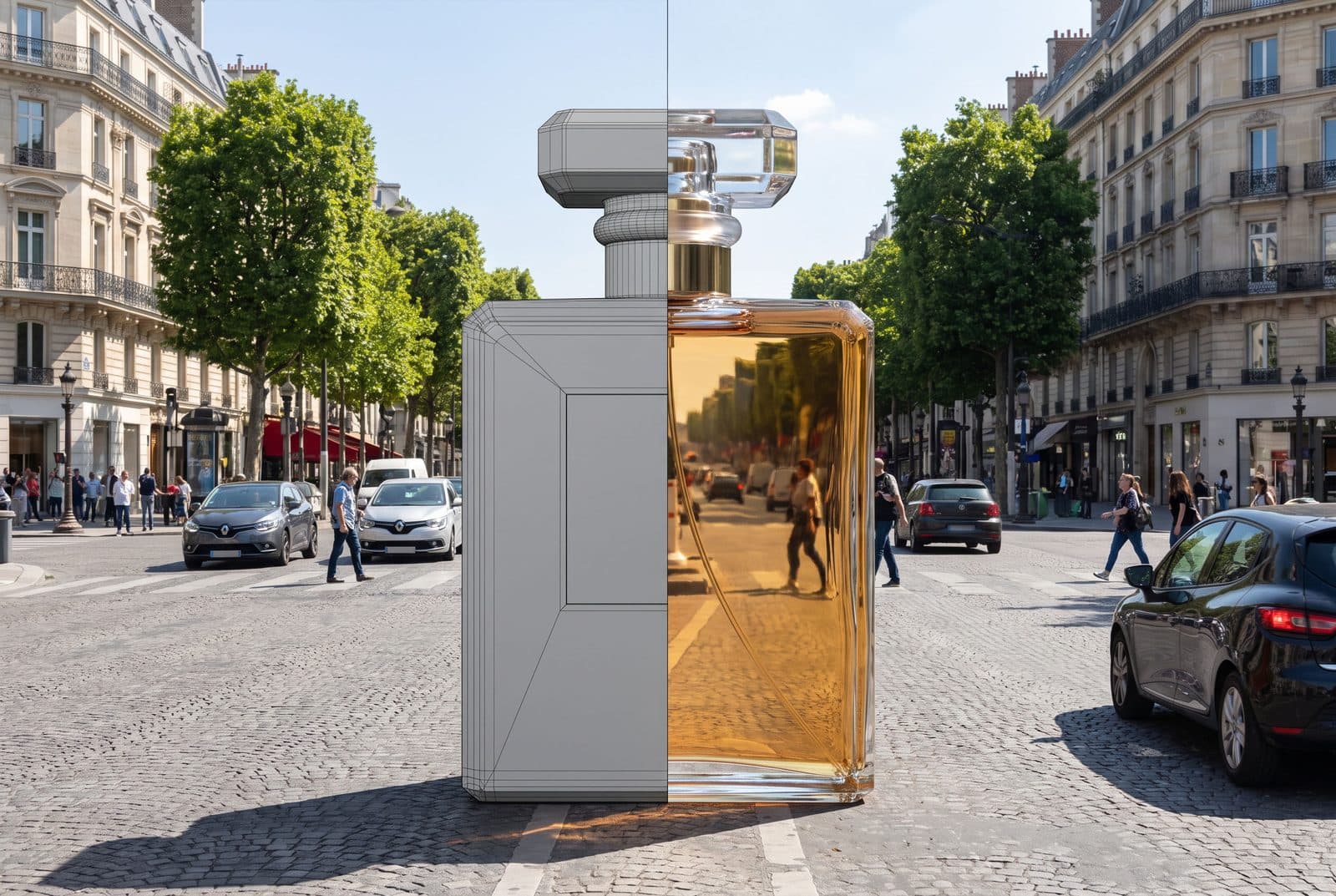
A FOOH is not a 3D render. It is a small production, with a shoot, a post-production chain and an approval chain. Broken down, an honest quote holds seven lines.
- ◆Concept and art direction : what it buys The idea, the location, the movement, the storyboard, range €3,000 to €12,000
- ◆Real-world shoot (plate) : what it buys Scouting, permits, camera operator, camera data capture, range €2,500 to €12,000
- ◆Modeling and look dev : what it buys The hero object, its materials, its light, range €4,000 to €20,000
- ◆Animation and simulation : what it buys The movement, the fluids, the cloth, the crowd, range €3,000 to €30,000
- ◆Compositing and grading : what it buys Melting the fake into the real: the line item that decides everything, range €4,000 to €20,000
- ◆Sound design : what it buys The sound that makes the scene believable in half a second, range €1,000 to €4,000
- ◆Adaptations : what it buys Formats, languages, markets, short cuts, range €600 to €2,000 per version
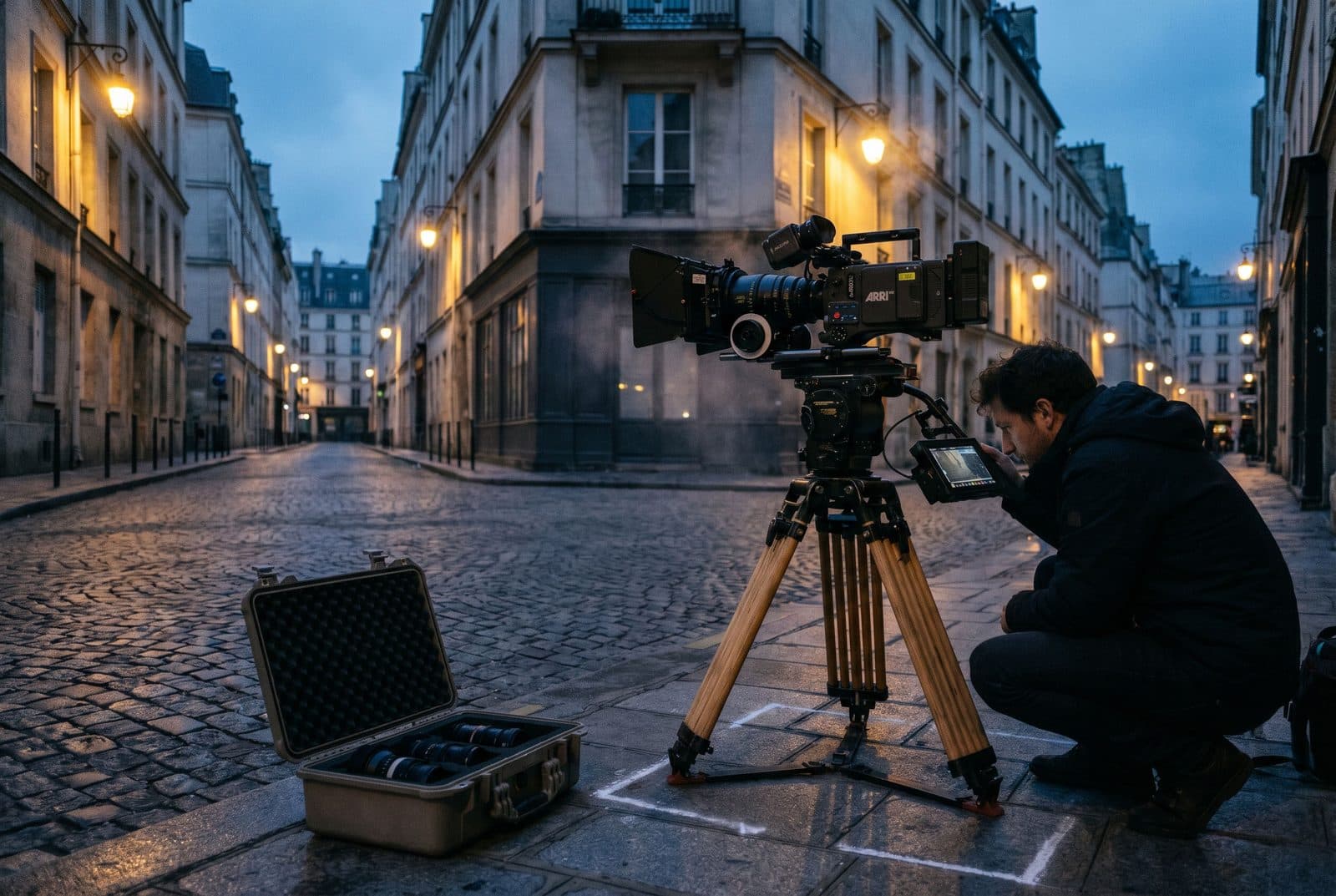
Two remarks. First: the real-world shoot, the plate in VFX jargon, the footage of the location the object will be composited into, is the line item most often underestimated, and most often responsible for a render that smells fake. A shot filmed on an iPhone, with no lens data and no camera-move notes, forces the studio to guess. Guess, and the illusion breaks.
Second: compositing, the last link in the chain, is the first thing low-cost quotes shave down. It is also the only one that buys you that famous second of doubt.
The 2026 Grid: Four Tiers
Four levels stand out clearly in the market. The ranges below match what we see across France and Europe for a studio production. They line up with the public rate cards published by FOOH agencies (most often €5,000 to €15,000 and up in France, £6,000 to £20,000 in the United Kingdom, for a single asset) and go past them as soon as you need a real-world shot filmed to order or a heavy simulation.
- ◆The test : what you get A locked-off frame, a simple object, an existing or stock real-world shot, few iterations, budget €4,000 to €10,000, timeline 1 to 2 weeks
- ◆The standard : what you get Modeled hero object, real-world shot filmed to order, clean animation, one location, serious finishing, budget €10,000 to €40,000, timeline 2 to 4 weeks
- ◆The premium : what you get Simulation (fluid, cloth, crowd), iconic location with permits, several shots, multi-market adaptations, budget €30,000 to €90,000, timeline 3 to 5 weeks
- ◆The platform : what you get A series of scenes, several cities, a reusable 3D asset, integration into a 360 campaign, budget €60,000 to €200,000, timeline 4 to 8 weeks
A word on timelines, because they set the price as much as complexity does. A serious studio counts around two weeks for a single asset, once the idea is locked, three or four when the location or the animation get complicated. Squeeze that to one week and you do not pay less: you pay more, because three artists work in parallel instead of one working in sequence.
The Calculation Nobody Runs
This is the least pleasant part to read. It is also the most useful.
FOOH is sold as free media. “No space to buy, 100% organic distribution, global reach.” All of that is true. What is less true is the conclusion people draw from it: that FOOH is structurally cheaper than traditional media.
Run the numbers. According to FOOH.com's FOOH Report 2026, the median FOOH video tops out around 184,000 views. Take a standard budget of €20,000. Cost per thousand views: roughly €109. For comparison, a programmatic DOOH CPM most often sits between $3 and $30 depending on the placement and the network.
- ◆~184,000 : median views for a FOOH video (FOOH Report 2026, FOOH.com)
- ◆~€109 : cost per thousand views of a median FOOH produced for €20,000
- ◆$3 to $30 : CPM of a programmatic DOOH depending on placement
Now run the numbers again on a FOOH that works. Five million views, same budget: the CPM drops to €4. And on campaigns that turn cultural, the giant Jacquemus bags passed 48 million views on Instagram, the cost per view no longer means anything.
FOOH is not cheap media. It is high-variance media. What you buy is not views: it is a lottery ticket whose odds are set by the quality of the creative.
That sentence should appear on every quote. It changes the way you budget, completely. If your FOOH is a bet, the mistake is not putting too much money into it. The mistake is putting in just enough to fail cleanly. A €5,000 FOOH that pulls 40,000 views is not a saving. It is €5,000 gone, plus the time of six people.
Same Budget: FOOH or Real Billboards
The question always comes up, so let us put the two columns side by side. Here is what €20,000 buys in 2026, based on the public rate cards of the French market.
- ◆What €20,000 pays for : Two to three weeks of bus shelters on a network targeted around your points of sale, or a fortnight-long metro campaign across a hundred or so faces : A complete CGI asset, shot, animated, finished, adapted into several formats
- ◆Lifespan : The length of the contract. After that, the panel changes advertiser : Unlimited. The video stays online, the 3D asset gets reused
- ◆Reach : Guaranteed, measurable, local : Not guaranteed, potentially global
- ◆Risk : Low. You know what you are buying : High. You are buying a probability
- ◆Residual asset : None : A 3D model, a real-world shot of the location, a brand world
In Paris, on the public rate cards of media resellers, a network of ten large-format faces in one arrondissement rents for around €5,000 excl. VAT a week, a premium bus shelter can exceed €4,000 a week, and a metro campaign starts at around €3,000 to €5,000 for a fortnight across some forty faces, printing not included, before climbing with the number of faces and stations. Billboards sell you local certainty. FOOH sells you an asset and a chance. These are not the same purchase, and setting them against each other makes little sense: the best campaigns use FOOH as the social spark, then real billboards to anchor it.
The Five Lines That Blow Up a Budget
It is rarely the 3D that sends a quote off the rails. It is the blind spots.
1. Approval Rounds
Every round of feedback costs days. A studio typically includes two to three iterations. Beyond that, the invoice climbs, and fast. The counter fits in one sentence: sign off on the storyboard, not the final render. Fixing an idea takes an hour. Fixing a render takes a week.
2. Filming Permits
Filming in front of a monument, flying a drone, planting a tripod on a listed square: each of these gestures comes with a form, a lead time and a fee. Count anywhere from a few hundred to several thousand euros, and above all, weeks on the calendar.
3. The Iconic Location
An anonymous intersection and the Place de la Concorde do not cost the same to rebuild. The more recognizable the location, the better the viewer knows it, and the more the slightest error in perspective or light leaps off the screen. The prestige of the set is paid for in compositing hours.
4. Rights and Clearances
Music, voice, a talent on camera, third-party brands visible in frame. A FOOH that goes viral is a FOOH people look at closely.
5. The Afterlife
A FOOH that takes off generates comments, reposts, press requests. Nobody budgets for the community management of the 72 hours that follow. And yet that is where a good part of the brand benefit is decided.
Where AI Changes (and Does Not Change) the Bill
The question comes up in every brief in 2026: does AI bring prices down?
Yes, on one precise point. Upstream, it shortens the phase that is both the most uncertain and the most expensive in meeting time: exploration. At Digiteyes, we generate visual intents, lighting moods, moodboards and previsualizations before production starts. What used to take a week of back-and-forth now takes two days. On a standard budget, that is a few thousand euros saved, and above all a creative decision taken earlier, and therefore taken better.
No, on everything else. The final deliverable of a serious FOOH is still built in 3D and compositing, shot by shot, by artists. For one simple reason: generative video cannot yet hold a brand object stable, in the right proportions, with the right logo, across twelve seconds and several angles. It produces the plausible. A FOOH needs the exact. The all-AI FOOH clips going for a few hundred euros do exist, and you can spot them in half a second. This is not an ideological position, it is a production fact.
How to Frame Your Budget in Three Questions
Before you ask for a quote, answer these. You will save time, and money.
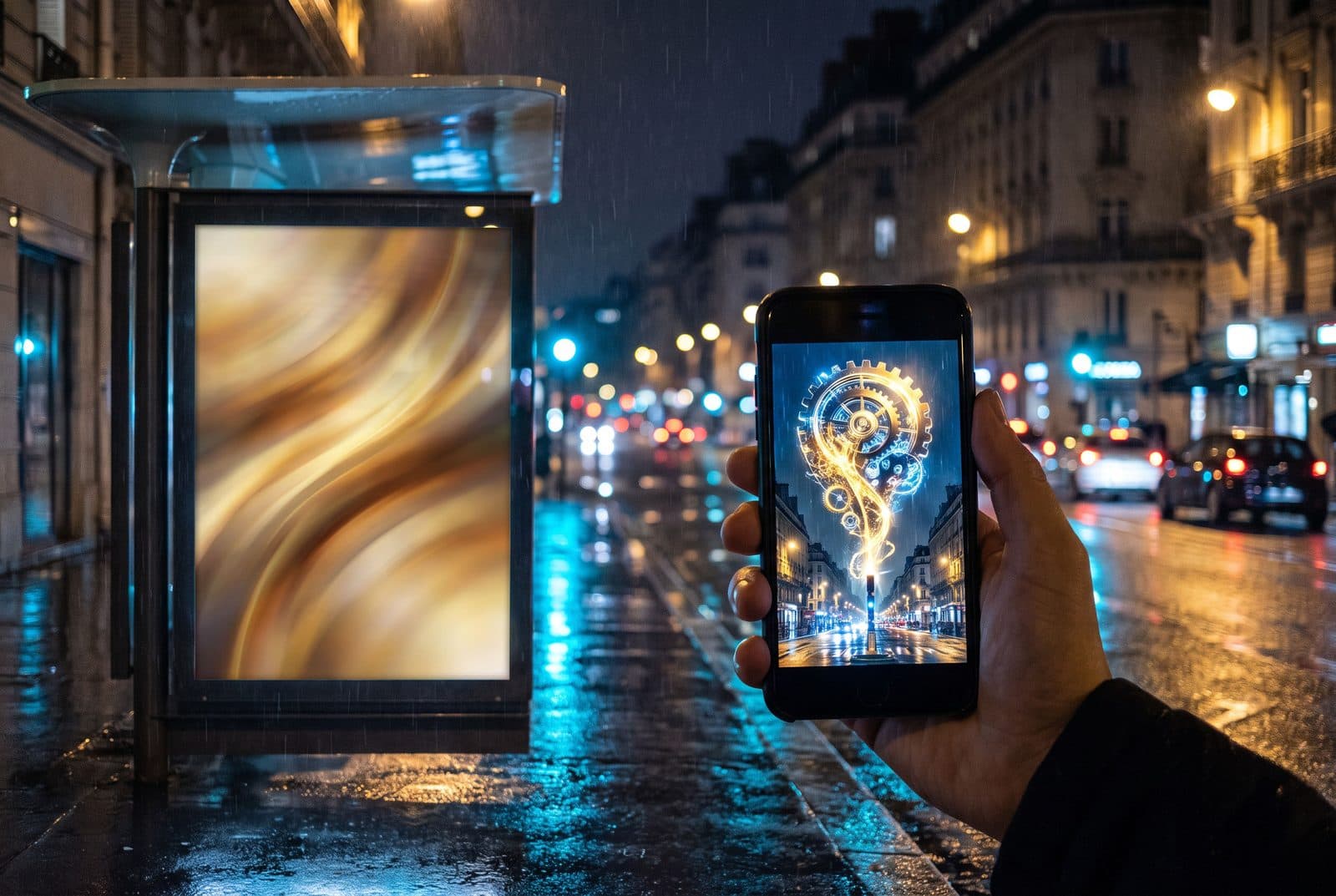
Can your object be a hero? A flacon, a sneaker, a bag, a bottle: yes. A service, a banking offer, a piece of software: far harder, and therefore far more expensive, because you have to invent an object before you can model it.
Is your FOOH a one-off or a territory? If it is a single shot, stay at the standard tier and put everything into the creative. If it is a brand territory you intend to extend, pay for the tier above from the very first asset: a well-built 3D model gets reused for years, a rushed one gets rebuilt every campaign.
What is success worth? If a million views is worth €100,000 of brand awareness to you, a €20,000 budget is reasonable. If it is only worth €10,000, do not do a FOOH. Buy billboards: at least you will know what you are paying for.
Frequently Asked Questions
- ◆How much does a FOOH campaign cost in 2026? From €4,000 for a simple test to €200,000 for a multi-city brand platform, in studio production. The heart of the market, a custom-modeled hero object with a real-world shot filmed on location and professional finishing, sits between €10,000 and €40,000. The budget goes into creation, not into buying media space.
- ◆Is FOOH cheaper than traditional billboards? Not necessarily. There is no media cost, but reach is not guaranteed. A median FOOH reaches around 184,000 views, which is a cost per thousand views of roughly €109 on a €20,000 budget, well above a DOOH CPM. That said, a FOOH that works collapses that cost, and leaves you a reusable 3D asset where billboards leave nothing.
- ◆What is the most expensive line item in a FOOH? It depends on the project, but two line items concentrate the risk: animation with simulation (fluids, cloth, crowds), which can climb to €30,000, and compositing, which decides whether the illusion holds. The real-world shoot, the plate, is the line item most often underestimated, and the first cause of a render that gives the fake away.
- ◆How long does it take to produce a FOOH? Around two to four weeks for a single asset, once the idea is signed off. One to two weeks for a simple test, up to two months for a multi-city series. Compressing the schedule does not cut the cost, it raises it.
- ◆Can you make a FOOH entirely with generative AI? Technically yes, and it costs a few hundred euros. But generative video cannot yet hold a brand object stable, with the right proportions and the right logo, for the full length of a shot. The result is spotted instantly and does a premium brand more harm than good. Today, AI is excellent upstream, for exploring and previsualizing.
Want a Price on Your Project?
Digiteyes designs premium FOOH and CGI for demanding brands and agencies, from idea to master. Send us your object, your location and your deadline, and we will send back a reasoned range: contact@digiteyes.fr.
Sources
- ◆FOOH.com · FOOH Report 2026 (median views, production volumes, 4,500 videos analyzed)
- ◆DOOH Marketing · DOOH Statistics 2026 (programmatic CPM $3 to $30, DOOH share)
- ◆OAAA · Out of Home Advertising Revenue Reaches Record $9.46 Billion (OOH and DOOH growth)
- ◆Adintime · Publicité dans le métro et réseaux d'affichage à Paris (2026) (indicative public rate cards: metro, large-format networks, bus shelters, printing not included)