In short
A 3D packshot means building your product's image in computer-generated imagery instead of photographing it. The result looks like a photo, sometimes better, but the source file stays alive: a new color, a new angle, a new setting, without calling a crew back to the studio. On a product page, 3D lifts conversion and lowers returns. Across an entire catalog, it often comes out cheaper than photography.
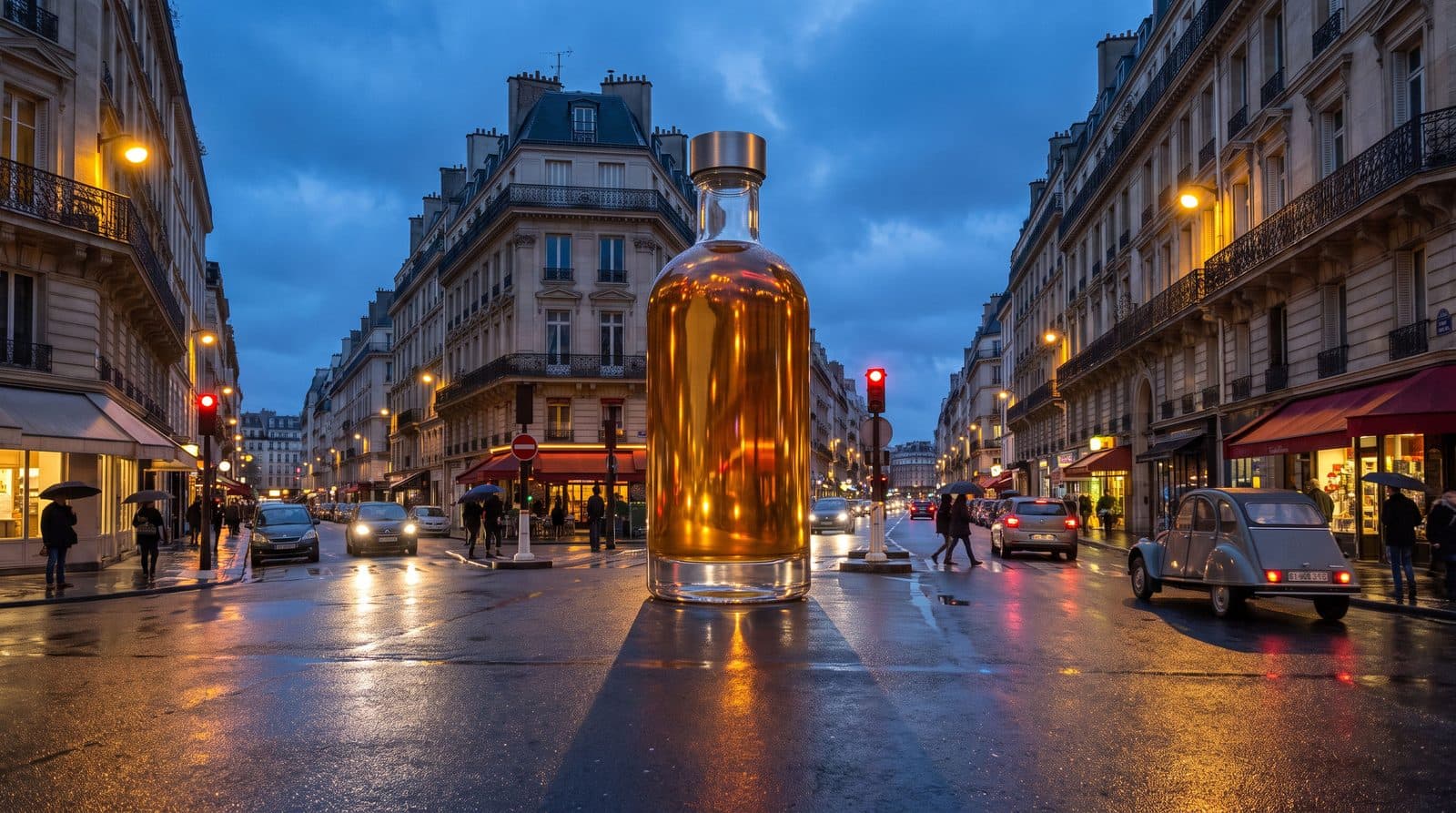
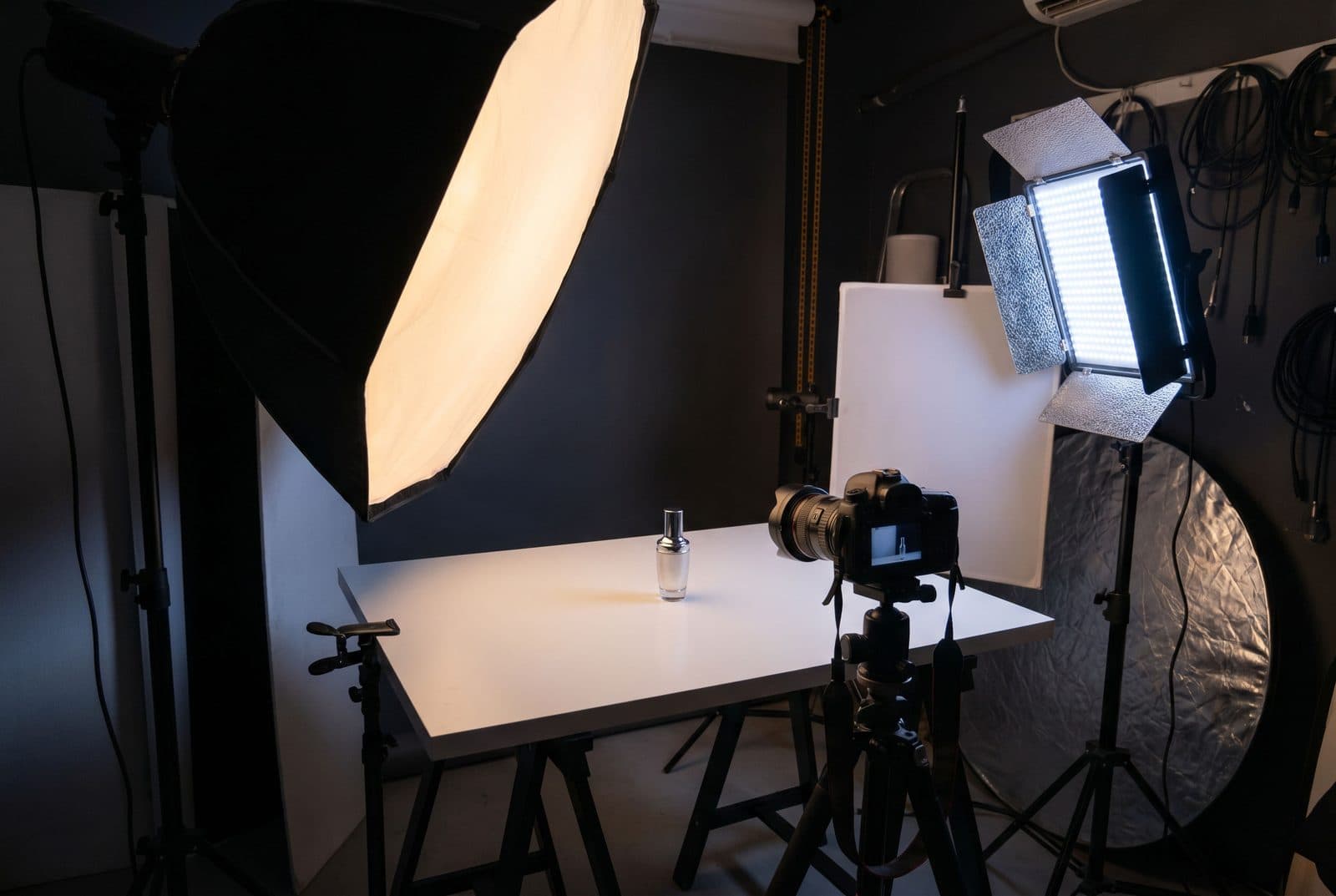
Put two images side by side. On the left, a bottle photographed in a studio, with its softboxes and its photographer. On the right, the same bottle, except no camera ever pointed at it: it was modeled, textured and rendered on a computer. Most people cannot tell which is which. That is the whole point.
The packshot is that crisp image of the product on a neutral background that you see everywhere: e-commerce page, catalog, marketplace. For decades, there was only one way to produce it: a real object, a real studio, a real photographer. Today there are two. And the choice between them is no longer a question of image quality. It has moved somewhere else.
The same image by two paths
Product photography starts from a physical object. So the object has to exist, it has to reach the studio, be set up, be lit, be shot from every angle, then retouched. Every color variant, every new packaging, every update restarts the same cycle, from the box to the shoot.
The 3D packshot starts from a file. The product is rebuilt in three dimensions, given its materials (the glass, the brushed metal, the lacquered plastic, the exact reflection of a liquid), lit in a virtual scene, and rendered into an image. Once this digital twin is built, it never sleeps. You rotate it, change its hue, place it in another setting, output ten formats, without ever pulling the object out of a box again.
That is the real difference, and it has nothing to do with the render. A photo is an image. A 3D packshot is an image plus a reusable mold.
What the numbers say
Let's start with what a marketing department cares about: does it sell better. The answer is documented. Shopify measured, as early as 2020, that product pages featuring 3D or augmented-reality content convert on average 94% more than pages without. 3D viewer vendors add that more than eight visitors out of ten interact with the model when it is offered, and that two buyers out of three say that a product they can turn in every direction gives them more confidence to place an order.
The other end of the chain matters just as much: returns. In 2025, Americans sent back $849.9 billion worth of goods, and e-commerce runs around a 19% return rate, 20 to 30% in apparel and more at some fashion pure players. Yet nearly one return in two (46%, Narvar) comes down to a product that does not match what the buyer had in mind: wrong size, wrong material, color different from the screen. That is exactly where 3D acts. By showing the product from every angle, in the right material, at the right scale, it narrows the gap between expectation and parcel. 3D solution vendors report 20 to 40% fewer returns among the merchants who adopt it. Knowing that processing a return costs 20 to 30% of the item's value (Optoro, Pitney Bowes), the math adds up quickly.
- ◆+94% : in conversion on product pages featuring 3D/AR (Shopify, 2020 data)
- ◆-20 to -40% : in returns with a 3D asset on the page, according to 3D solution vendors
- ◆46% : of returns due to a size, fit or color that disappoints (Narvar)
The real math is the catalog
On a single image, photography can be cheaper. A photographer for a simple product is sometimes half a day and the matter is settled. Where the comparison tips is on volume and duration.
The orders of magnitude, in France. Mass packshots on a white background are billed at €15 to €35 per image by specialized studios, with no art direction. As soon as brand imagery is involved, a studio day with photographer, stylist and retoucher comes to €3,000 to €8,000 for a handful of hero images, usage rights excluded, and a polished 360-degree shoot often falls between €800 and €2,500 per product. Multiply by a catalog of hundreds of references, add the color variations and the seasonal updates, and the bill goes back up with every change.
The 3D packshot flips the logic. The first image costs modeling and shading time: in a studio, building a product's digital twin comes to €2,000 to €8,000 depending on complexity (a bottle with liquid, thick glass and a metal cap sits at the top of the range), then each hero image €600 to €2,500. But the second hue, the tenth angle, the new setting cost a fraction of that price: €400 to €1,600 per variation, because everything comes from the same model. With a freelancer, divide these amounts by two or three; with the big luxury studios, multiply them. On a large catalog, studios reuse materials, lighting and templates from one product to the next, and vendors' case studies report 50 to 80% savings on variations compared with an equivalent photo production.
And there is one thing photography can never offer: the 3D packshot does not expire. The day you launch a gold limited edition, you do not reschedule a shoot. You change a material in the file, and the image is ready that same evening.
- ◆Starting point : product photography A physical object, in studio, 3d packshot A 3D model, a file
- ◆Cost of one image : product photography Competitive on a simple unit, 3d packshot Heavier upfront (modeling)
- ◆Cost of a variant : product photography A new shoot every time, 3d packshot A fraction of the model: €400 to €1,600 per variation
- ◆Update turnaround : product photography Reschedule a shoot, 3d packshot Change a material, render, deliver
- ◆Conversion / returns : product photography Market benchmark, 3d packshot +94% in conversion (Shopify), 20 to 40% fewer returns (3D vendors)
- ◆Product that does not exist yet : product photography Impossible, 3d packshot Possible before the first prototype
A photo, you pay for it once and you have it once. A 3D model, you pay for it once and you adapt it a hundred times.

When photography keeps the edge
We are not going to sell you 3D as the answer to everything. That would be false. For a one-off, photogenic product that you shoot once with no intention of adapting it, photography often remains the shortest path. Certain living materials, a fabric that drapes, a dish, skin, still demand real modeling work to match the ease of a sensor. And there is the question of authenticity: for a brand whose argument is craftsmanship, showing the real object, imperfections included, makes sense.
The good news is that the question is not "one or the other". The most advanced brands mix them. Photography for the hero pieces and the deliberately real, 3D for the catalog, the variations and everything that needs to exist in a hundred versions. Nike lets you configure its sneakers in 3D, L'Oréal and Sephora let you try on makeup in augmented reality, Wayfair places your furniture in your living room. None of these brands has dropped photography. They have just stopped asking it to do everything.
The role of a studio, and the place of AI
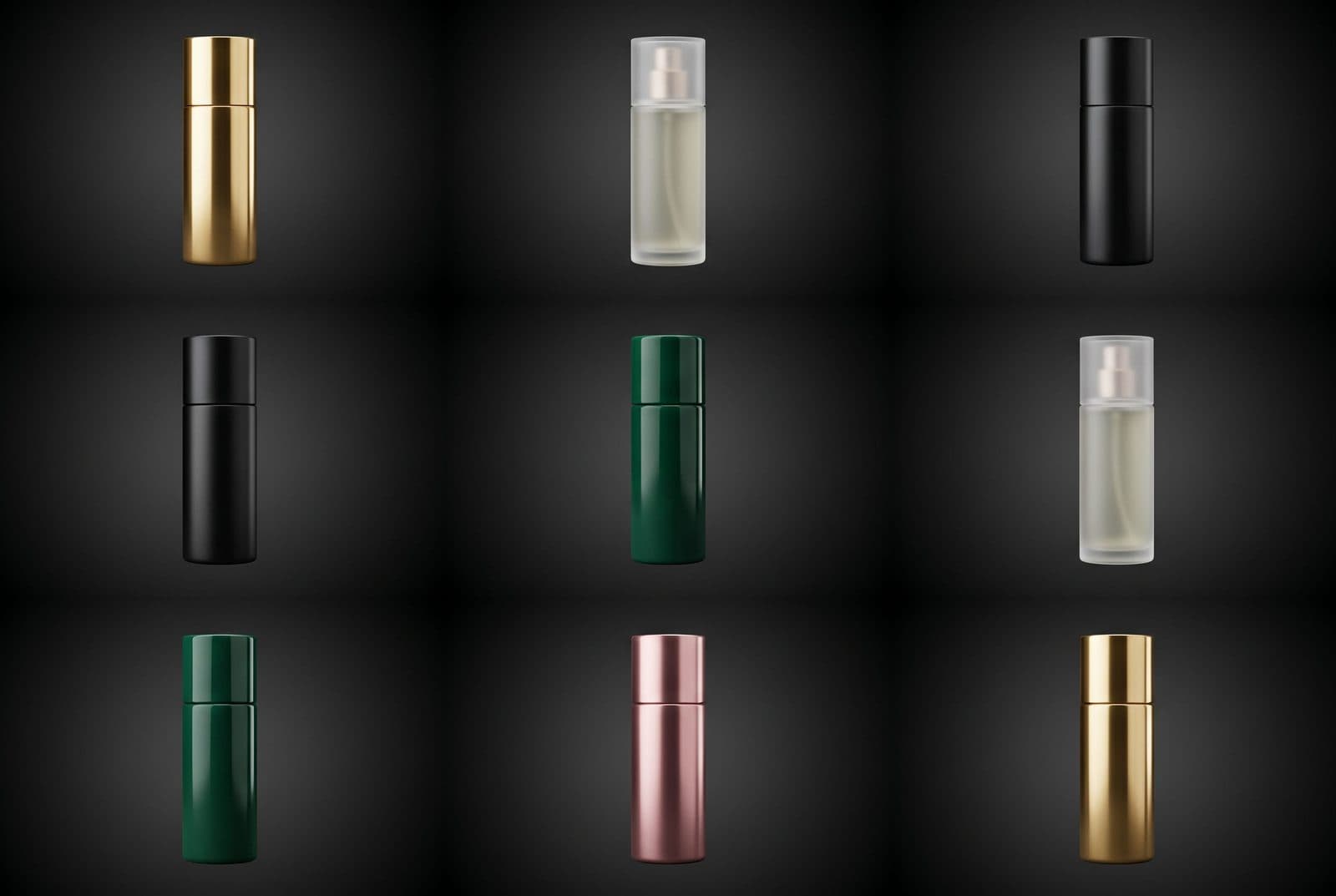
A believable 3D packshot does not come out of a button. It brings together three crafts: modeling (rebuilding the object to the millimeter), shading (giving each material its exact behavior under light, the polish of a metal, the depth of glass, the velvet of a foundation), and the art direction that decides the light, the frame, the intent. That is where the gap is settled between an image that "looks rendered" and an image you take for a photo.
And AI? At Digiteyes, it works upstream, never on the deliverable. It serves to explore moods, test lighting, rough out a brand world before launching the real production. It speeds up the thinking. But the final image, the one that has to hold its own against a professional sensor and stay consistent from one product to the next, remains rendered and finished by artists. For LT Piver, one of the oldest French perfumers, it is this standard that separates a bottle you believe was photographed from a bottle that "looks synthetic". No generator yet holds the accuracy of a brand hue across fifty references. A 3D pipeline does.
Frequently asked questions
- ◆What is a 3D packshot? A 3D packshot is the image of a product built in computer-generated imagery rather than photographed. The product is modeled in three dimensions, given its materials and lighting, then rendered as a still image or a video. The render aims for the same realism as a studio photo, with a reusable source file for every variation.
- ◆Does a 3D packshot cost more than photography? On a single simple image, photography can be cheaper. On a catalog or products with many variations, 3D often comes out cheaper, because every new color, angle or setting starts from the same model. On variations, vendors' case studies report 50 to 80% savings compared with an equivalent photo production.
- ◆Does 3D really lower returns? Yes, in the available data, which mostly comes from 3D solution vendors: they report 20 to 40% fewer returns among merchants who add 3D content to their pages. 3D shows the product from every angle, at the right scale and in the right material, which reduces returns linked to a wrong size, a wrong look or a misleading color, that is nearly one case in two (Narvar).
- ◆Can you tell a photo from a 3D packshot by eye? When the work is done well, no. A premium 3D packshot reproduces the light, the reflections and the grain of a real photo. The difference shows up mostly on sloppy renders, where the material or the lighting give away the synthesis. Realism is a matter of studio, not software.
- ◆Should everything move to 3D? Not necessarily. Photography keeps the edge for one-off pieces, certain organic materials and brands that bet on the real. The most effective approach combines the two: photography for the hero and the authentic, 3D for the catalog and the variations.
A catalog to move to 3D?
Digiteyes designs premium packshots and product CGI for demanding brands and agencies, from model to master. Let's talk about your references, your variations and your deadlines: contact@digiteyes.fr.
Sources
- ◆Shopify · The Evolution of 3D Ecommerce (+94% in conversion, 2020 merchant data)
- ◆KeyShot · Reducing Return Rates with 3D Product Visualization (the 40% fewer returns figure, from the vendor side)
- ◆NRF · Consumers expected to return nearly $850 billion in merchandise in 2025 ($849.9bn in returns, 19.3% online return rate)
- ◆Optoro · Returns Unwrapped 2024 (cost of processing a return: 27% of the purchase price) and Narvar, via Retail Dive (46% of returns for size, fit or color)