In short
In beauty, an image's credibility rests on two details the eye judges in a fraction of a second. First, the way light travels through a translucent material, skin, the wax of a lipstick, a serum, a perfume bottle: that is subsurface scattering. Second, the accuracy of the brand colour, which is not a mood but a precise value. On the first count, the best image models, Nano Banana Pro ahead of the pack, now produce very convincing skin and materials. On the second, AI aims for plausible, not exact: the shade drifts, and it has to be pulled back in post-production, frame by frame, with no guarantee from one reference to the next. CGI, by contrast, computes the light and treats colour as data: the same value across thirty references and a hundred angles. That is why, for a real product that has to match the tester on the counter, a 3D studio keeps the edge as soon as a whole range is involved. At Digiteyes, AI works upstream, and a single isolated final visual can be made with AI; as soon as a range or a brand shade is at stake, the visual stays built frame by frame.
Take a lipstick. Its colour carries a code name, a reference, a number that marketing signed off on over months. Now ask an image generator to reproduce it. The image will be beautiful, the skin will be right, and the shade will be close. Close, not exact: a red that leans orange, a finish that invents its own highlights. On a single image, a colourist pulls that back in post-production. On a range of thirty references, nobody pulls it back by hand.
Beauty is the arena where the image forgives nothing. You look at skin from very close, you compare a shade to the one on the back of your hand, you judge the material on instinct. Two mechanisms decide whether a visual reads true or false: subsurface scattering and colour accuracy. On the first, generative AI has taken a leap in a year. On the second, it stays approximate, and that is where computed 3D keeps the advantage, above all as soon as a whole range has to hold together. Here is why, with the numbers.
Beauty, the hardest test for an image
A sneaker packshot on a white background, AI outputs that cleanly today. A face in close-up or an amber bottle with light passing through it too, with the best models. What stays hard is exactness: beauty stacks up translucent materials, complex reflections and a demand for colour down to the finest tenth of a shade, product after product. And the market does not play around. Beauty and personal care sold online were worth more than 250 billion dollars worldwide in 2025, growing 11 to 13% a year (Statista). When the colour does not match, the customer sends it back.
- ◆3.67 / 5 : the best brand-colour fidelity score among the major AI models tested; most stay below 3 (IMG.LY benchmark, 2026)
- ◆~23% : return rate on foundations bought online, where returns are possible, mostly because of shade mismatch (2026 benchmarks)
- ◆$257B : in online beauty and personal care sales worldwide in 2025 (Statista), a field where colour accuracy is paid for in cash
Those three figures tell the same story. In beauty, colour is not an aesthetic detail, it is a commercial promise. When a visual shows a shade the product does not hold, the return goes out, and the margin with it. And that is precisely where generative AI is at its most fragile.
Subsurface scattering: what AI does well now, and what it does not control
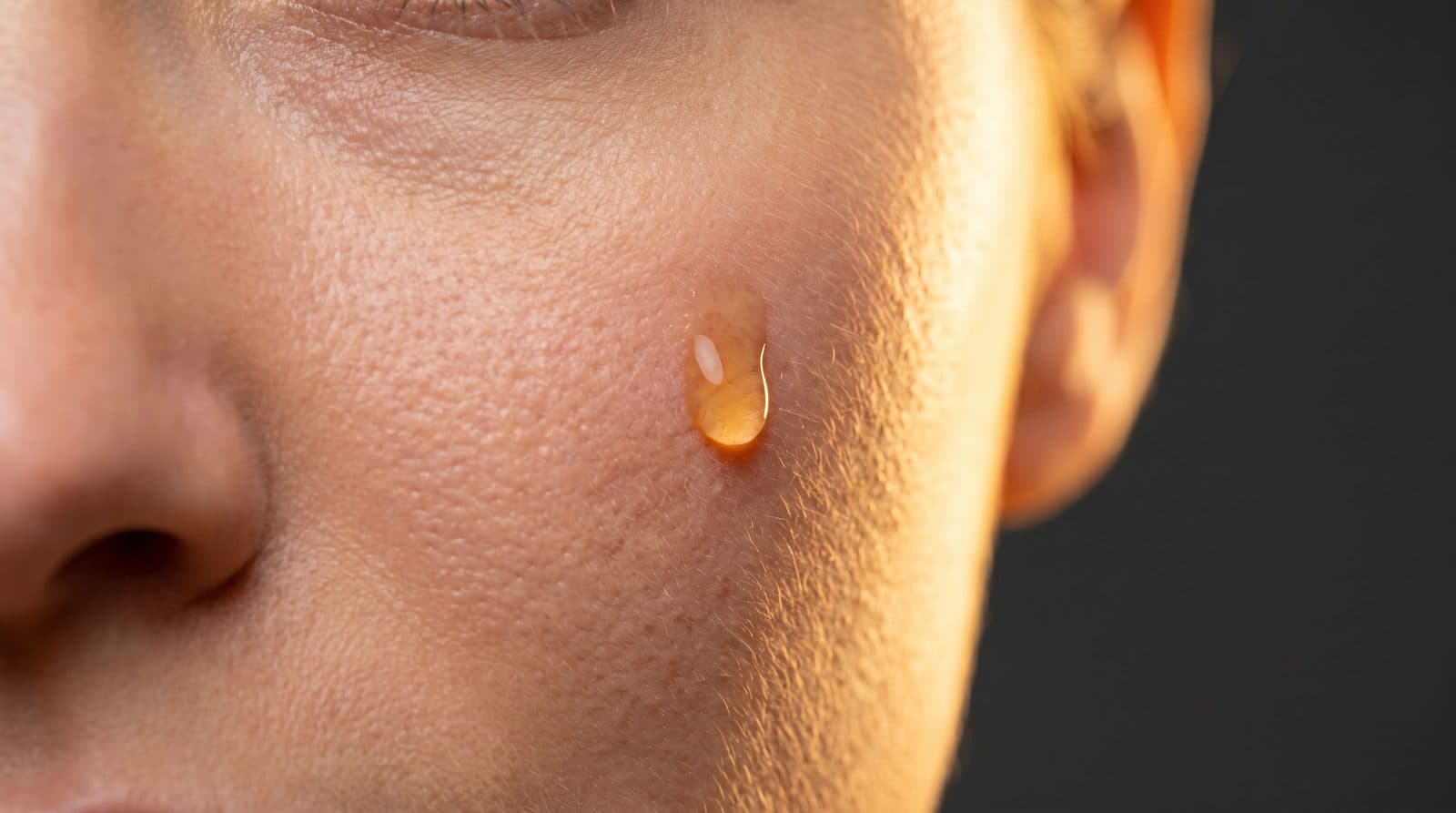
Look at a lit candle, an ear against the light, a dab of cream under a lamp. Light does not simply bounce off the surface: it enters the material, wanders inside, takes on colour, then comes back out softened. On skin, that journey turns red, because of the blood beneath the epidermis. The phenomenon has a name, subsurface scattering, the scattering below the surface, and it is what gives skin, wax, marble and a perfume their sense of life. Without it, skin looks like plastic. 3D render engines have computed it for years, from real physics: material thickness, density, scattering colour.
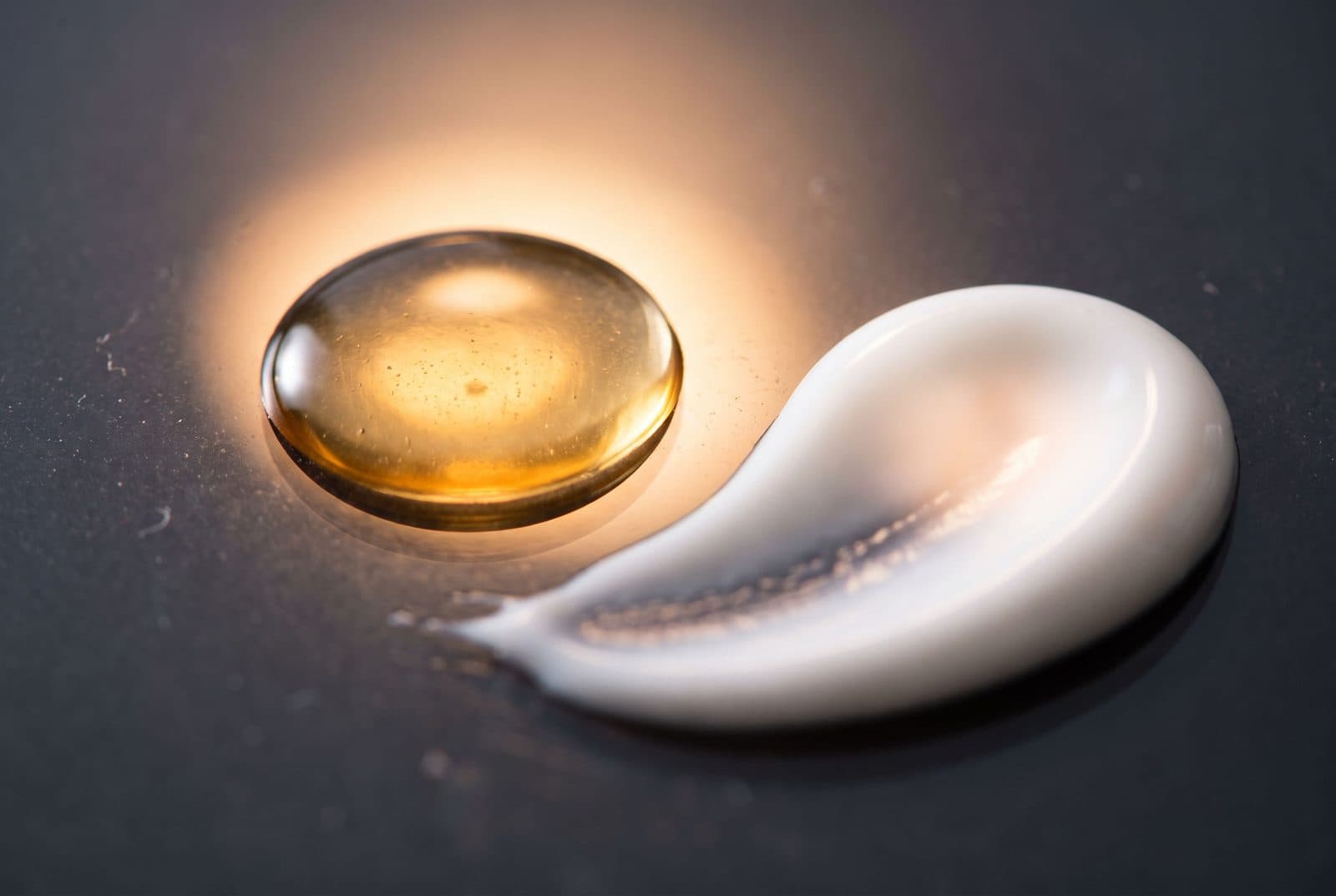
Generative AI, on the other hand, computes nothing: it has seen millions of images of skin and reproduces their look, statistically. And to be honest, it does it better and better. The latest generation of models, Nano Banana Pro ahead of the pack, output very convincing skin, serums and translucent bottles, to the point where the fake no longer shows at first glance on a single image. What is missing is no longer the look, it is control: the scattering depth of a cream, the translucency of a wax, the inner colour of a liquid are not parameters you set, they are results you get, or do not get, from one generation to the next. On a single image, you pick the good one. On a range, you want the same material on every reference, under every light, and that is where physical computation takes over again.
A brand colour is not a mood, it is a value
Here is the most concrete point, and the most painful for anyone who has tried. An image generator now accepts a hexadecimal code in the prompt, and some even make it a selling point. But it does not read it the way design software does: it reads language, and the value is to it just a string of characters it interprets by guess. As a result, it optimises for plausible, not for the spectrophotometer. The IMG.LY benchmark, which measures the gap between the colour requested and the colour returned across fifteen models, is unforgiving: the best tops out at 3.67 out of 5, and twelve models out of fifteen stay below 3. Ask for two precise brand colours and the model drifts one of them, adds a gradient, or even slips in a third shade. The only known way to get close to the exact value is to supply a colour swatch as a reference image and then iterate, or to correct the shade in post-production. On a single image, a colourist does it in a few minutes. On a range, that manual fix repeats on every visual, with no guarantee that two images answer each other.
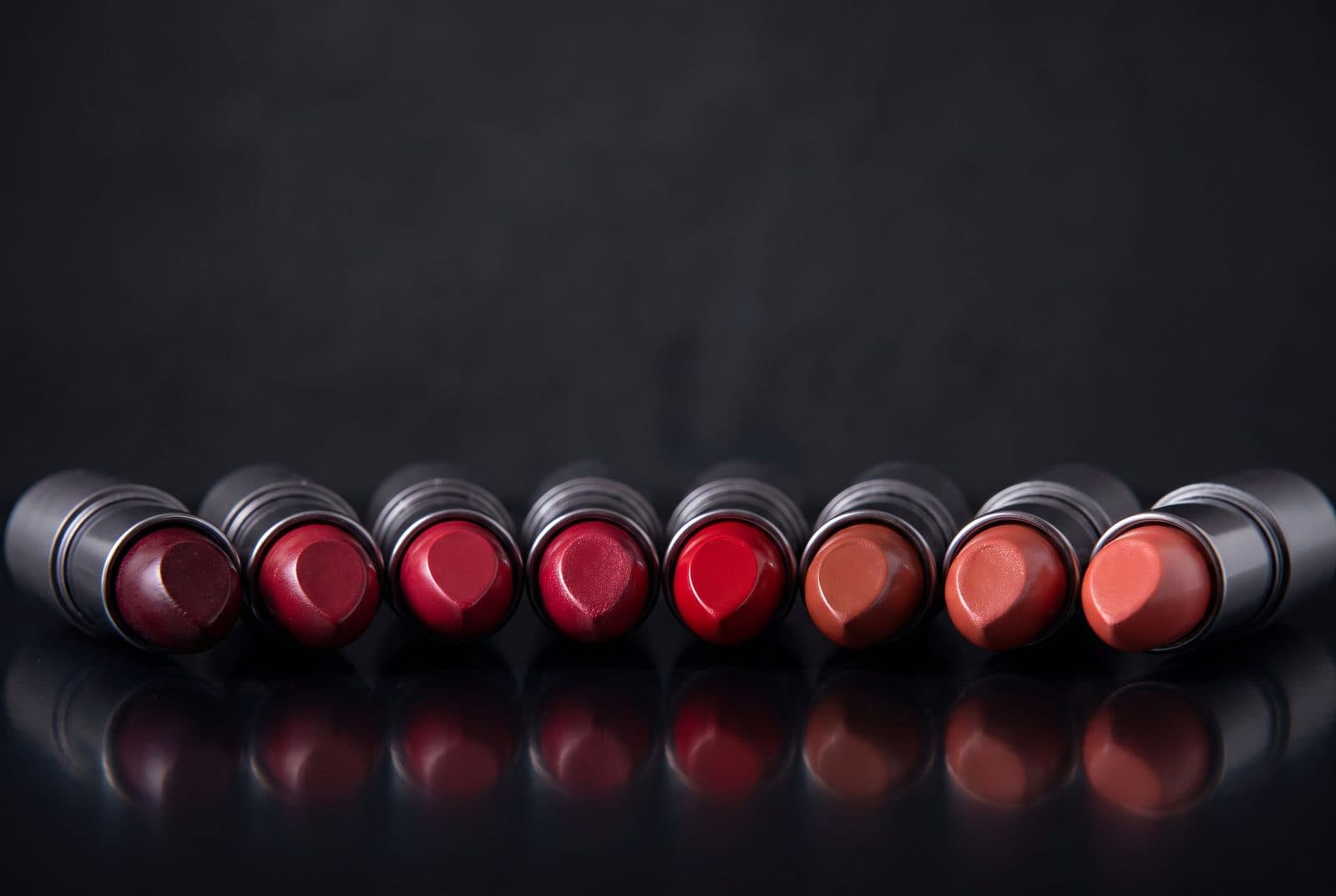
CGI takes the problem from the other end. You give it the exact value, the hex code, the Pantone reference converted into the working colour space, the refractive index of the glass, the scattering profile measured on the real product, and it renders reproducibly. What is written comes out on screen, on one condition that serious studios know well: a colour pipeline managed end to end (ACES or OpenColorIO, calibrated monitors) and, for an exact match, a spectrophotometer measurement of the real product. The difference is not a matter of artistic talent, it is a difference in nature: generation is probabilistic, a brand requirement is deterministic. For a logo, a signature colour, a bottle that has to match the tester on the shelf, you cannot play the prompt lottery.
In beauty, a wrong shade is not a failed image, it is a product the customer does not recognise. And what people do not recognise, they send back.
What a wrong shade costs
The subject is anything but cosmetic, if you will. On foundations and concealers sold online, the return rate climbs to around 23% where returns are allowed, almost entirely because of shade mismatch. Across all beauty sold online, nearly two returns out of three come from a product judged different in real life from what the screen showed. Every parcel sent back means logistics, lost margin, a product that is sometimes unusable. A visual that promises a colour the skin cannot find does more than annoy, it feeds that cost directly.
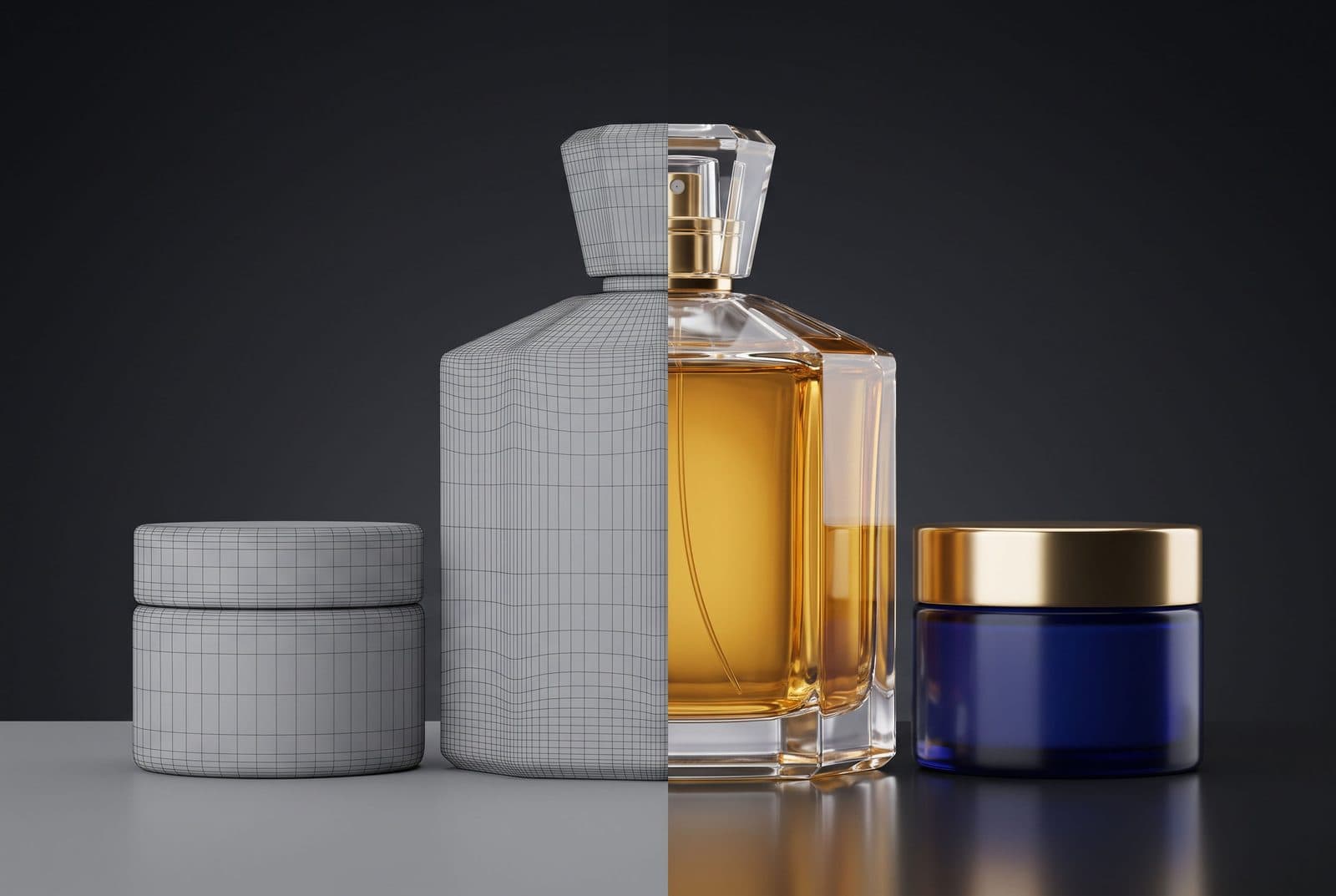
Conversely, a faithful visual reassures and sells. That is the whole point of the beauty packshot: show the real shade, the real texture, the real finish, so that what arrives in the box matches what the screen promised. Computed 3D allows this because it starts from the product's values. It is an investment, but one that protects the margin as much as it serves the image.
Where AI truly helps, and where 3D stays necessary
None of this means AI has no place in beauty, quite the opposite. At Digiteyes, it works upstream, where it is brilliant: exploring art directions, testing ten lighting moods in an hour, generating a brand universe to frame a moodboard, roughing out a set before 3D production. And when a generated skin or material is good, it serves the 3D team as a render reference. On these tasks, AI saves precious time, and the quality it reaches on skin today makes that exploration far more useful than a year ago. A final visual made with AI is not off the table here. It is a matter of conditions: a single isolated image, with no range to hold together, no brand shade to hit to the code, and a check by an artist before delivery.
But as soon as a range is involved, a packshot that has to match the tester on the shelf, a series of images that have to answer each other, the visual stays built in a render engine, from the product's measured values. Not out of principle, out of necessity: it is the only way to guarantee that the same red comes out across thirty references and a hundred angles. AI speeds up the thinking, CGI signs off the range. Confuse the two and you risk a wrong shade in a market that does not forgive. Combine them well and you produce faster without giving up an inch on quality.
Frequently asked questions
- ◆What is subsurface scattering? It is the scattering of light beneath the surface of a translucent material. Light enters, disperses inside, takes on colour, then comes back out softened. It is what gives skin, wax, marble or a perfume their living look. In 3D rendering it is computed from the material's real physics and can be dialled in. Generative AI imitates it from images, very well now on a single image, but with no dial and no guarantee from one generation to the next.
- ◆Why does generative AI miss brand colours? Because a generative model accepts a colour code but does not read it the way design software does: it interprets language and optimises for a plausible image, not an exact value. The 2026 IMG.LY benchmark shows that even the best models stay far from the expected colour fidelity, 3.67 out of 5 for the best, twelve models out of fifteen below 3. Shades drift, gradients appear, sometimes a colour too many. On a single image, the shade is corrected in post-production; on a range, that manual correction does not guarantee consistency from one visual to the next.
- ◆Is CGI more reliable than AI for a beauty packshot? For a real product that has to match the in-store version, yes. CGI starts from the product's exact values, colour code, material, refractive index, and renders reproducibly within a managed colour pipeline: what is specified comes out on screen. That is decisive when colour is a commercial promise and not just a mood.
- ◆Does AI have a use in beauty production? Yes. Upstream first, to explore art directions, test lighting moods, generate moodboards or rough out a brand universe. The best models now render skin and materials very well, which turns those explorations into genuine render references. It is on a range, where colour and material have to be exact and identical from one visual to the next, that it gives way to computed 3D rendering. And on a single isolated final visual, with no range and no contractual shade, AI can be enough, provided an artist validates the image before delivery.
- ◆Why does colour matter so much in beauty? Because a shade is a product. A customer compares the colour in the visual to the one she expects, and returns it if it does not match. On foundations sold online, the return rate reaches around 23%, driven mainly by shade mismatch. A faithful visual therefore protects the margin as much as the image.
A beauty visual worthy of the product?
Digiteyes creates premium packshots and CGI films for beauty and luxury, with a demand for colour and material calibrated to the real product. Let's talk about your shade, your bottle, your material: contact@digiteyes.fr.
Sources
- ◆IMG.LY GenAI Benchmarks · Why AI Image Models Miss Your Brand Colors (colour fidelity measured in CIEDE2000, best model at 3.67 / 5)
- ◆ITU Online · What Is Subsurface Scattering? (definition and role of SSS in the realism of skin and wax)
- ◆Eightx · Beauty & Cosmetics Return Rate Benchmarks 2026 (foundation return rate around 23%, 64% of beauty returns for a product “different in real life”)
- ◆Loop Returns · The most returned products in e-commerce (2026) (reasons for cosmetics returns: shade and preference)
- ◆Statista, via Oberlo · Beauty and personal care e-commerce market (online beauty and personal care sales: $257B in 2025, annual growth)
- ◆W. Bakkali (Google Cloud Community, Medium) · Color Code Adherence in AI Image Generation (measured gap between the requested code and the rendered colour, and the reference swatch as a workaround)