In short
In three years, FOOH (fake out-of-home) has moved from one-off stunt to established format. Industry counts put roughly 1,872 FOOH videos produced in 2025, with a median around 184,000 views, distributed largely organically. Our reading of the public data comes down to three points. It is a hits business: a handful of campaigns pull hundreds of millions of views, the vast majority stay quiet. The geography has shifted: Paris launched the trend, New York and Dubai now convert better. And the novelty peak is behind us: volume has slipped a little, audiences spot the clumsy fakes, and idea and realism matter again. This observatory compiles public sources and our field reading, not a proprietary panel.
A bus-sized handbag driving through Paris. A giant mascara sitting on a London Underground train. A billboard celebrating Messi in Dubai, filmed as if by a passerby. Three scenes that never happened, seen hundreds of millions of times. In 2023, FOOH came out of nowhere. Three years on, it is no longer a surprise, it is a format that brands put in the budget.
So we wanted to step back. Not another list of viral campaigns, there are a hundred of those. A reading: what do the numbers of FOOH really say once you line them up? What follows crosses the public industry counts with what we see in production at Digiteyes. Three lessons, and what they change for a brand still weighing whether to jump in.
Three years of FOOH, what the numbers say
Start with the backdrop. Out-of-home is still a huge market: around 54 billion dollars in spend worldwide in 2025, nearly half of it digital, according to the World Out of Home Organisation. FOOH buys none of those panels. It borrows their language, then lives on social feeds. Industry counts give an order of magnitude: about 1,872 FOOH videos produced in 2025, a figure slightly down from the 2024 record.
- ◆1,872 : FOOH videos counted in 2025, slightly down after the 2024 peak (industry counts)
- ◆~184,000 : views for a median FOOH video, distributed largely organically (FOOH Report 2026)
- ◆160M : organic views for the fake Adidas billboard dedicated to Messi in Dubai, the format's record (The Drum)
Two numbers to keep in mind, because they tell opposite stories. The median, 184,000 views, describes the reality of the bulk of the pack: fine, nothing more. The record, 160 million, describes the potential. Between the two, a chasm. And that chasm is the observatory's first lesson.
FOOH is a hits business, not a volume business
The temptation, looking at FOOH, is to believe in a view-making machine. The data says the opposite. The distribution is wildly uneven: a few campaigns capture almost all the attention, the mass of videos plateaus. Adidas and its fake Messi billboard on the Dubai Frame, released half an hour after the 2022 World Cup final, reached 160 million views and 12.5 million interactions. L'Oréal's Elvive, with its hair coming alive on an Oxford Circus panel, reached nearly 17 million views. The pink iPhone 15 pop-up by Apple and Ian Padgham, around 7 million. Next to that, the median video does 184,000 views. It is not a lottery, but it looks like one.
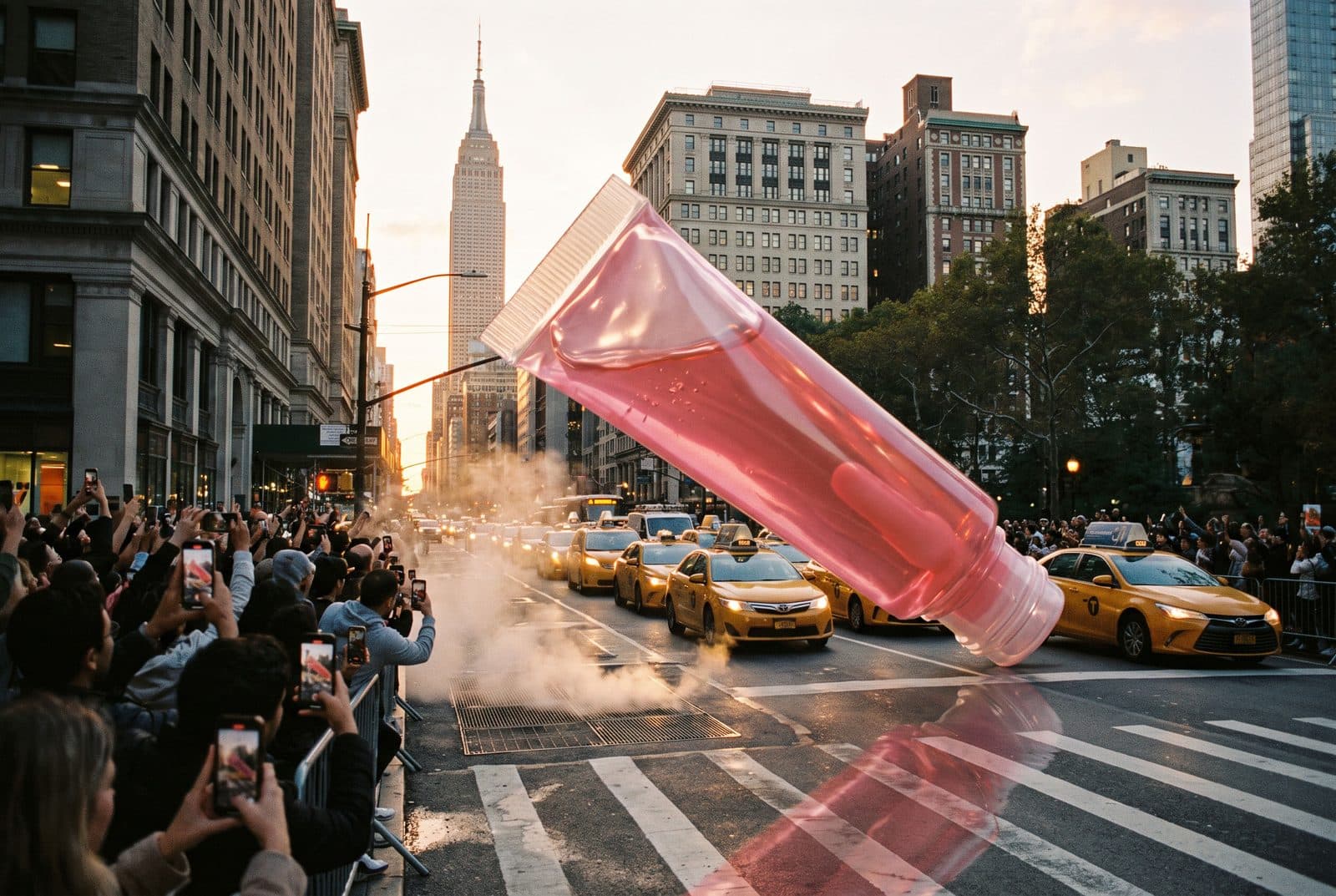
What that changes, in practice: producing a FOOH guarantees nothing. What separates the 160 million from the 184,000 is never budget alone. It is the idea, the timing, the object chosen, and an execution that holds up one second too long. A brand that jumps in thinking the 3D alone will spark the buzz has already lost. FOOH rewards strong ideas, not mere presence.
The geography has switched sides
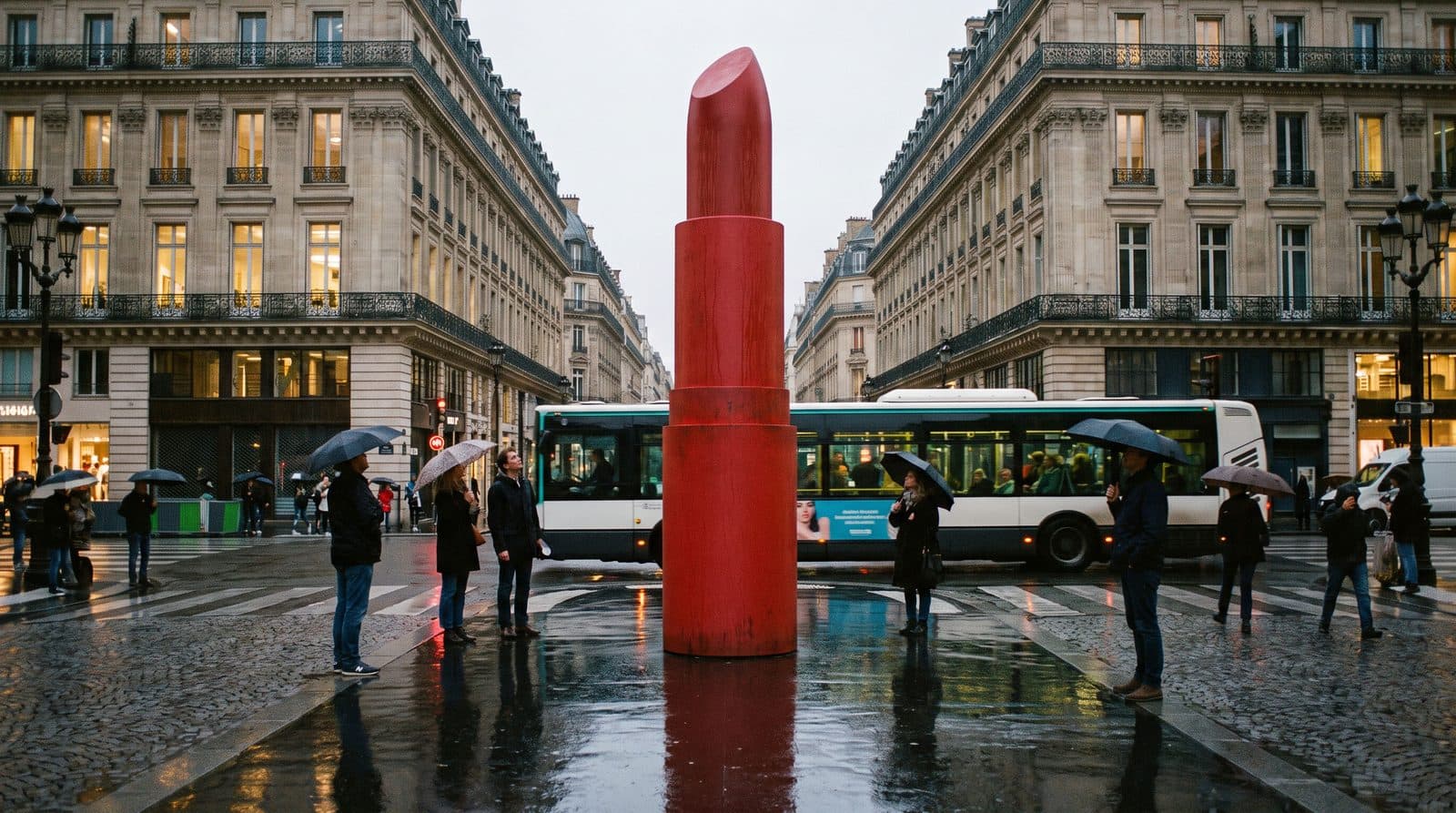
Second lesson, more unexpected. Paris more or less invented the genre: the Jacquemus bags, the giant L'Oréal lipstick, it all started there. As a result, the city still leads on the number of FOOH produced. Except volume no longer makes performance. The 2025 counts are clear: New York and Dubai now beat Paris on the ability to make a video take off. Placing your object in front of the Eiffel Tower is no longer a shortcut to viral.
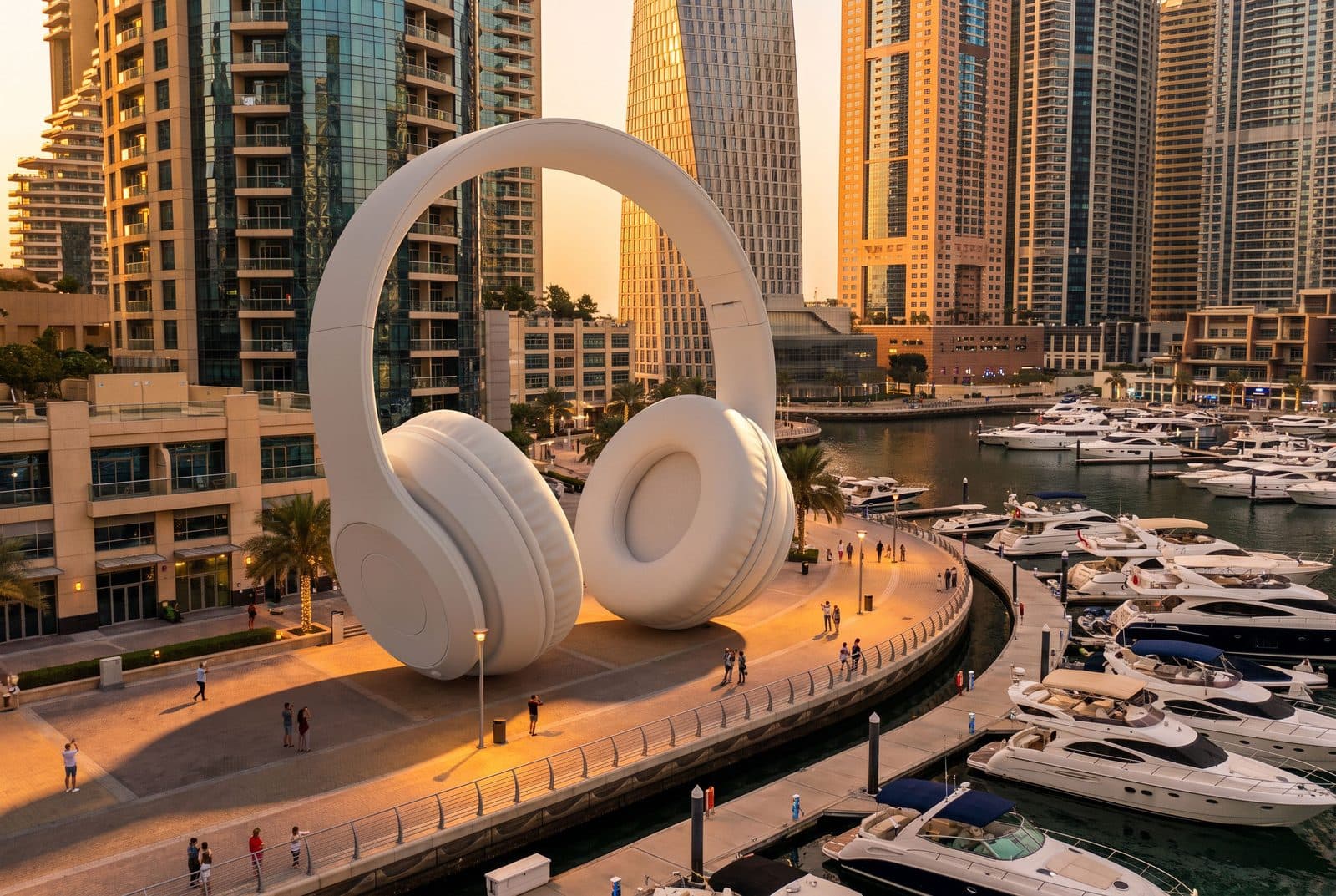
The lesson is not to change city for the sake of it. It is that the location has become a creative variable, not a guarantee. Too many Paris FOOHs look alike, audiences have absorbed the backdrop, the surprise wears off. The sector that used the format most in 2025 is actually sport, not fashion. The codes are moving. A brand is better off choosing its location the way it would choose a film shot, for what it tells, not because a competitor did it first.
Placing a giant object in front of a famous landmark is no longer enough. The backdrop has become a cliché, and audiences have learned to read it.
The novelty peak is behind us, and that's good news
Third lesson, probably the most important for what comes next. Volume fell in 2025. That is not an accident, it is a maturation. When a format explodes, everyone piles in, average quality drops, and audiences end up spotting the trick. That is exactly what is happening to FOOH. Clumsy fakes fool no one anymore, and part of the audience now associates the too-perfect with mass-produced content, sometimes with soulless AI.
There is even a risk of rejection when the brand plays on sensitive ground, or when the reveal of the trick disappoints. Conversely, a well-made FOOH keeps real power: in the FOOH Report 2026, nearly one video in five still reaches the virality threshold defined by the study. The difference between the two comes down to a rule we repeat at every brief: a good FOOH must feel real at 90 percent, and keep only 10 percent of the impossible. Realism first, effect second. The moment it smells of a render, the audience checks out.
What this means for your brand
If you boil the observatory down to one decision, here it is. FOOH still works, very well even, but the window of post it and it buzzes has closed. What remains is a powerful format for a product launch, a brand moment, a live reaction to an event, provided you have a desirable object, an idea that genuinely surprises, and a premium execution. Luxury, beauty, fashion, sport and automotive keep an edge, because their products are photogenic.
And one safeguard, the same as in 2023: FOOH is a format, not a strategy. Stacking fake billboards with no idea behind them is the surest way to bore people, fast. A successful campaign often uses FOOH as a social spark, then switches to the real world to anchor the message. The fake feeds the real, it does not replace it.
And where does AI fit in?
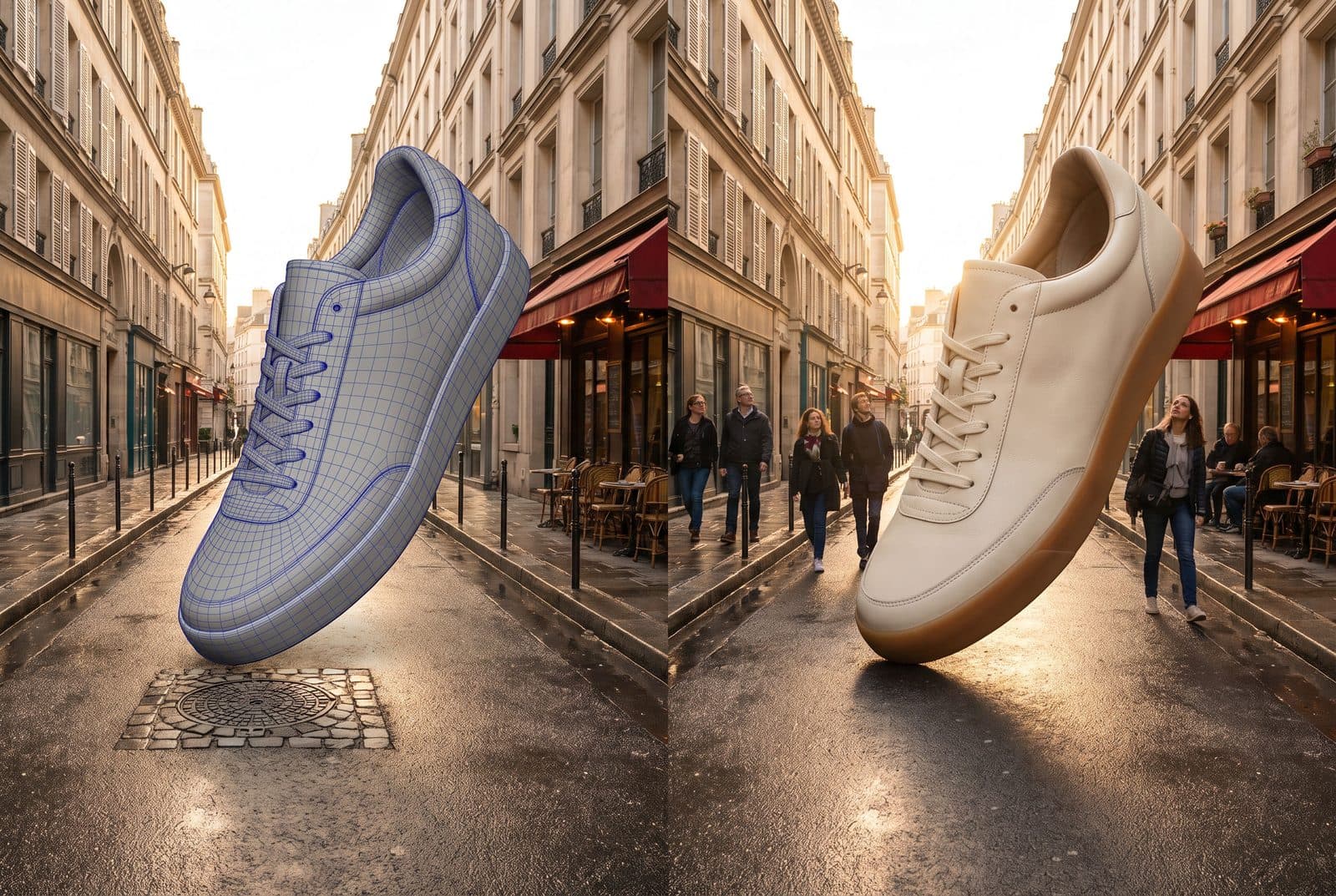
And generative AI, which promises fake billboards in a few minutes? At Digiteyes, it works upstream. It helps explore an intent, test a lighting mood, rough out a world before production starts. It speeds up the thinking, not the final render.
The deliverable itself stays crafted frame by frame by artists. That is precisely what the observatory's data says: audiences punish the too-fake, and a consumer AI quickly produces a pretty thumbnail, rarely a shot that fools the eye one second too long. On a FOOH, that second is the whole point. It is what separates a premium campaign from mass content forgotten at once.
Frequently asked questions
- ◆What is the Digiteyes FOOH Observatory? It is our regular reading of the FOOH (fake out-of-home) phenomenon, crossing public industry counts with what we see in production. The 2026 edition holds three lessons: FOOH is a hits business, the geography has switched sides, and the novelty peak is behind us. It is not a proprietary panel, but a synthesis of public data and field experience.
- ◆How many views does a FOOH campaign get on average? The industry median sits around 184,000 views per video in 2025, distributed largely organically. But the distribution is very uneven: a handful of campaigns pass tens, even hundreds of millions of views, while the mass stays far lower. FOOH is a hits format, not a guarantee of reach.
- ◆Does FOOH still work in 2026? Yes, but differently from 2023. Video volume has slipped a little and audiences spot the clumsy fakes. A well-executed FOOH keeps real power: nearly one video in five still reaches the virality threshold measured by the FOOH Report 2026. The window of post it and it buzzes on its own, however, has closed: it takes an idea and serious realism.
- ◆Do you have to shoot in Paris? No, and that is one of the 2025 lessons. Paris still leads on the number of FOOH produced, but New York and Dubai convert better in terms of virality. The location has become a creative variable: choose it for what it tells, not because it is the fashionable backdrop. An over-seen setting weakens the surprise.
- ◆How much does a FOOH cost and how long does it take? Depending on the complexity of the object, the setting and the finish, a studio-produced FOOH campaign most often sits between 10,000 and 40,000 euros, from 4,000 euros for a simple test to more than 100,000 euros for a multi-city platform. On timing, count two to four weeks for a polished asset, up to two months for a multi-city series, with the upstream art direction being decisive. The 3D model then stays reusable across other scenes and markets.
A FOOH that stands out is planned, not improvised
Digiteyes designs FOOH and premium CGI for the most demanding brands and agencies, from idea to master. Let's talk about your object, your place, your moment: contact@digiteyes.fr.
Sources
- ◆FOOH.com · FOOH Report 2026 (4,500 videos analysed: 2025 volume, median views, virality rate)
- ◆The Drum · How Adidas got 160M organic views with a fake Messi billboard (the format's record for views and interactions)
- ◆World Out of Home Organisation · Global OOH market 2025-2026 (OOH spend, share of digital)
- ◆FOOH · Trends and rankings 2025 (sectors and cities: Paris, New York, Dubai)
- ◆Marketing Brew · Why brands are embracing fake out-of-home (market context and brand adoption)