En bref
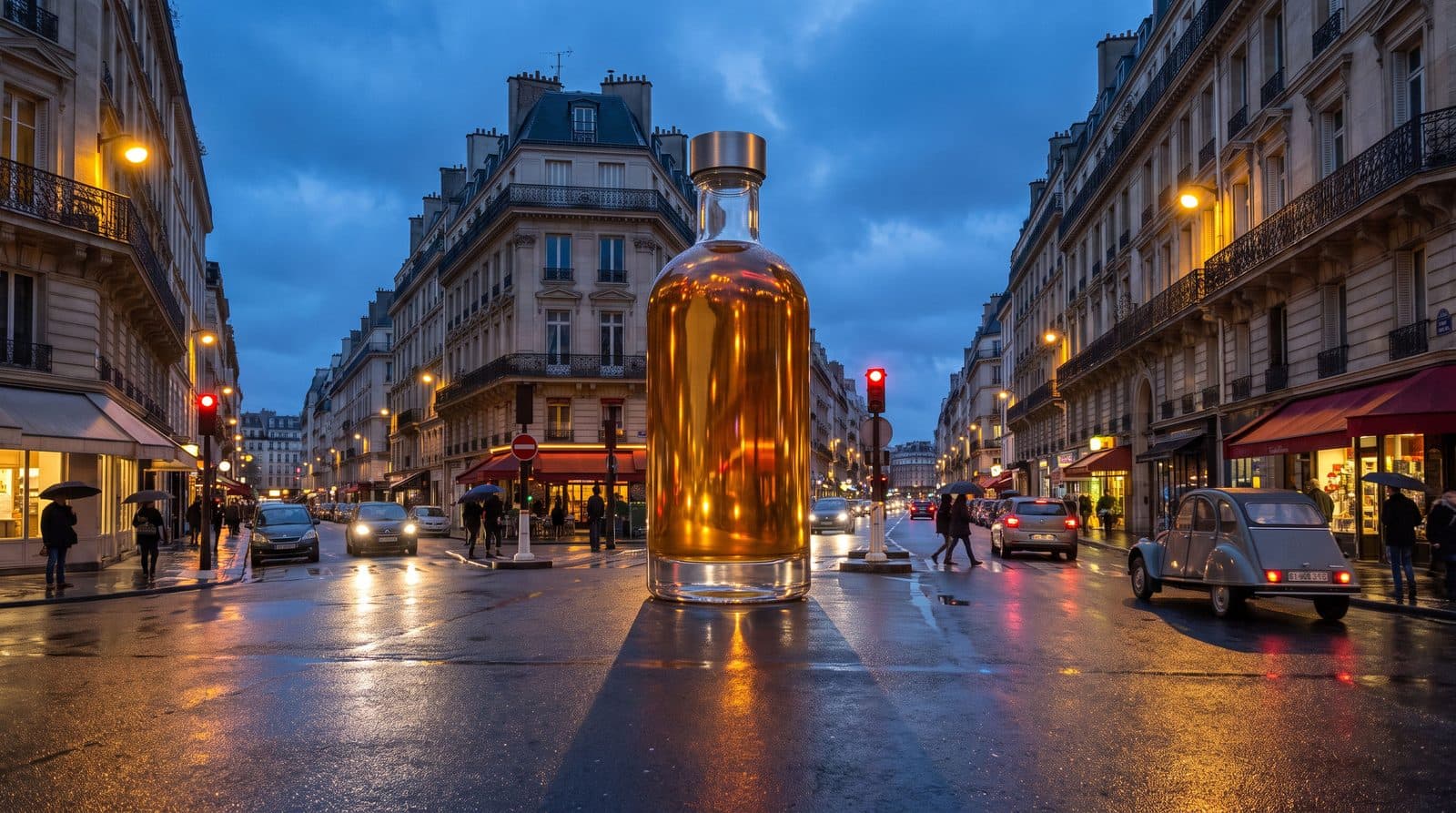
Le FOOH (fake out-of-home) est une publicité extérieure qui n'existe pas dans la réalité : un objet géant, un affichage impossible ou une scène spectaculaire fabriqués en images de synthèse (CGI), puis diffusés en vidéo sur les réseaux comme s'ils avaient été filmés sur place. L'intérêt : une portée massive en organique, pour un coût média proche de zéro.
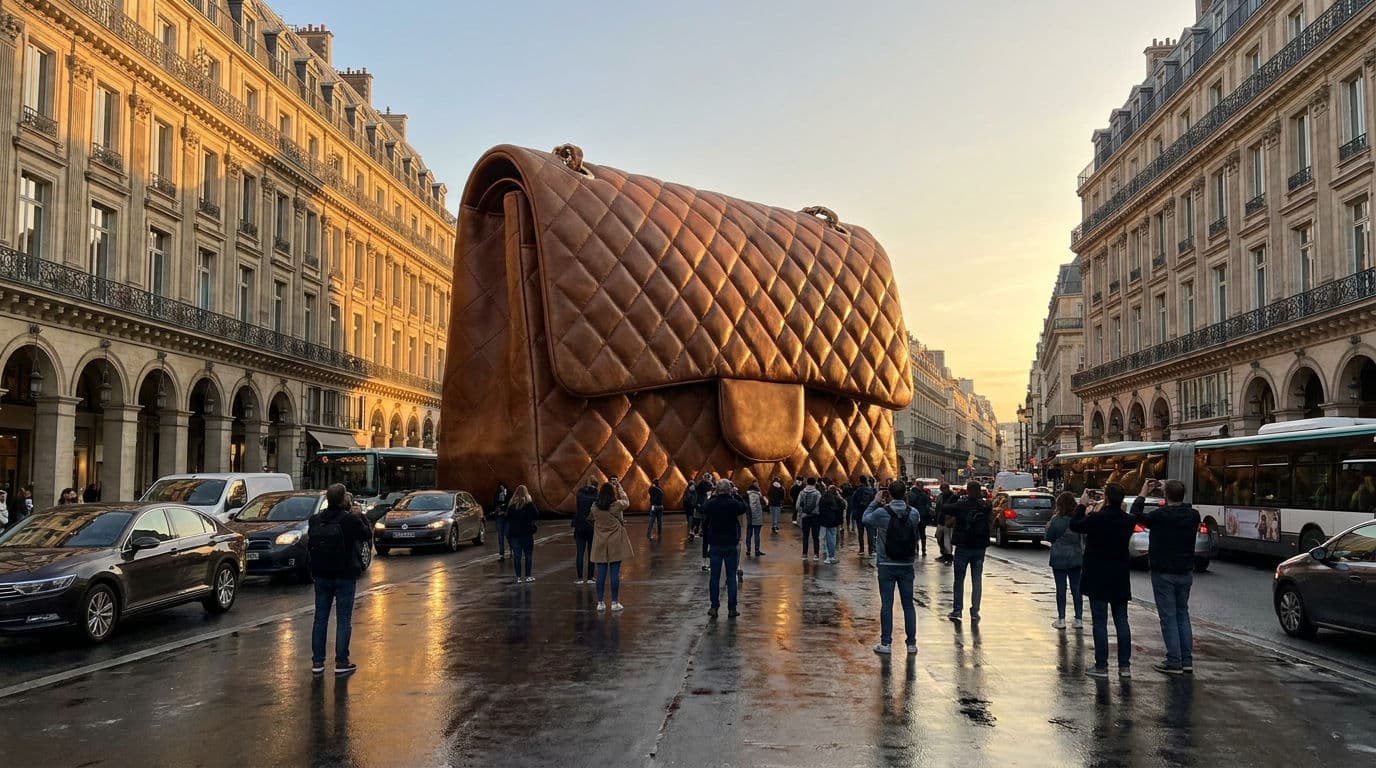
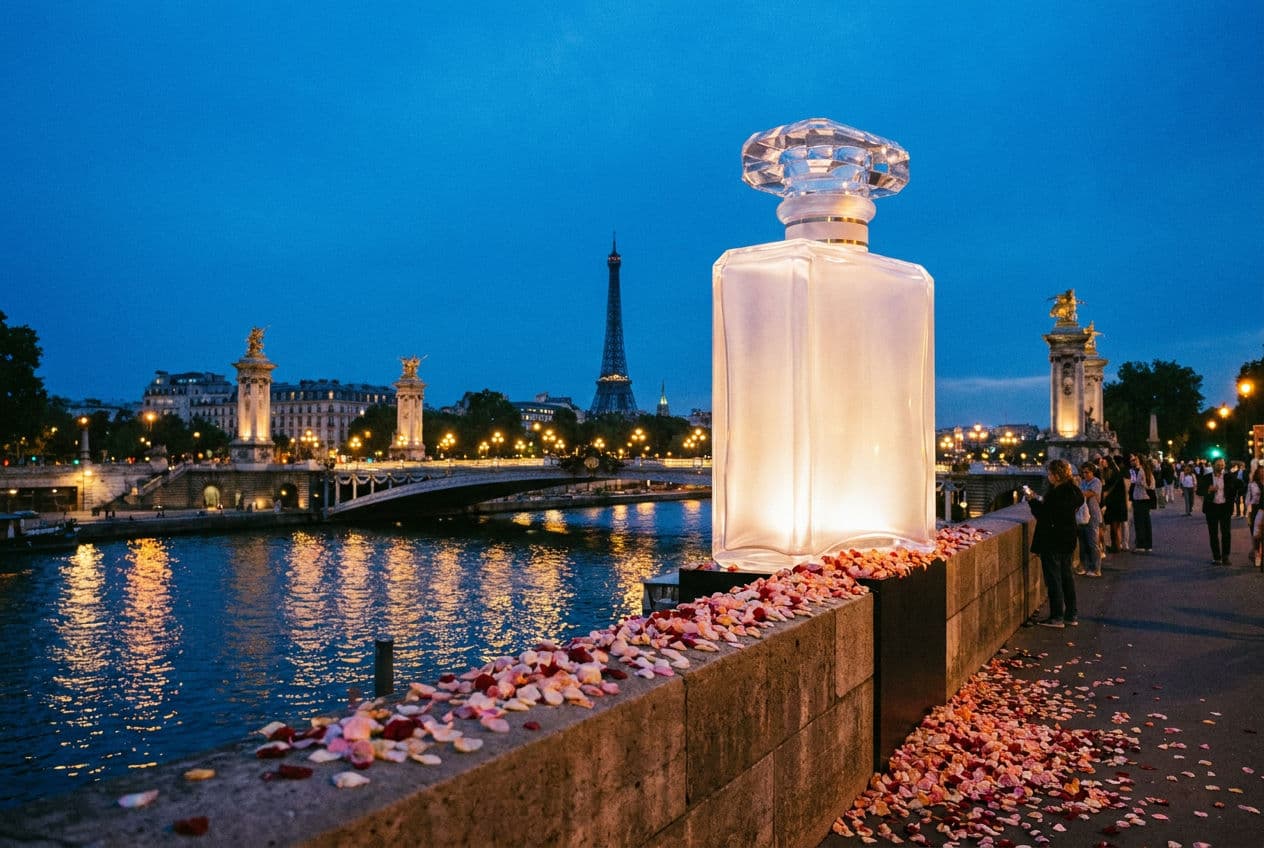
En 2023, un sac de la taille d'un bus traversait Paris dans une vidéo Jacquemus. La même année, un mascara géant se posait sur le toit d'un bus londonien pour Maybelline. Aucune de ces scènes n'a jamais eu lieu. Pourtant, elles ont été vues des dizaines de millions de fois, partagées, commentées, copiées. Bienvenue dans le FOOH.
Le terme reste jargonneux, alors posons-le simplement. « Out-of-home », c'est l'affichage extérieur : panneaux, abribus, façades. « Fake out-of-home », c'est le même langage visuel, mais entièrement reconstitué en 3D et pensé pour vivre sur un écran de téléphone, pas dans la rue. On ne loue aucun emplacement. On fabrique l'illusion.
Pourquoi ça marche aussi bien
La réponse tient en un mot : la surprise. Notre cerveau a appris à ignorer la publicité classique. Un objet de marque haut comme un immeuble, lui, déclenche une micro-hésitation. « C'est vrai ? C'est faux ? » Cette demi-seconde de doute suffit à arrêter le scroll, et c'est là que tout se joue.
- ◆~1 900 vidéos FOOH produites en 2025, selon les recensements du secteur
- ◆~184 000 vues en médiane par vidéo, en diffusion quasi 100 % organique
- ◆~49 M de vues pour la campagne des sacs géants de Jacquemus
Les chiffres parlent d'eux-mêmes. Côté grandes réussites, le faux panneau d'Adidas célébrant le titre mondial de Messi a dépassé la centaine de millions de vues en quelques jours, diffusé d'abord comme une vidéo « amateur » non identifiée. Et ce qui change tout par rapport à l'affichage physique : il n'y a pas d'emplacement à payer. Le panneau n'existe pas, donc personne ne le loue. Le budget part dans la création, pas dans la location d'espace.
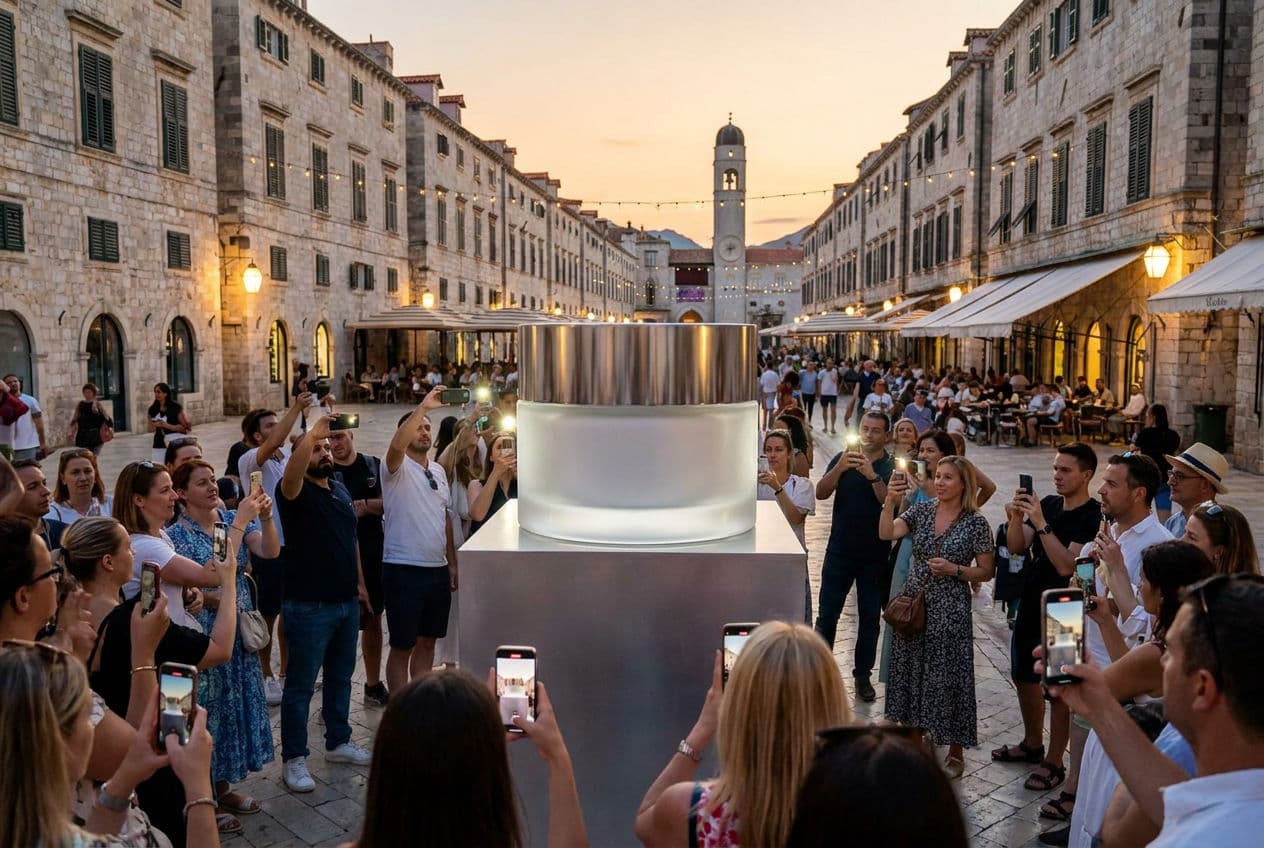
Autre atout, plus discret : le FOOH affranchit la marque des contraintes du réel. Pas d'autorisation de tournage, pas de grue, pas de météo, pas de monument inaccessible. On peut habiller l'Arc de Triomphe ou faire flotter un produit au-dessus de la Seine sans jamais y toucher.
FOOH ou affichage classique : ce qui change
- ◆Portée : Locale, liée à l'emplacement (OOH classique) / Potentiellement mondiale, via le partage (FOOH)
- ◆Coût média : Location d'espace, souvent l'essentiel du budget (OOH classique) / Quasi nul : diffusion organique sur les réseaux (FOOH)
- ◆Délai : Réservation, impression, pose (OOH classique) / Production CGI, quelques jours à quelques semaines (FOOH)
- ◆Mesure : Estimations de trafic (OOH classique) / Vues, partages, commentaires en temps réel (FOOH)
- ◆Risque : Faible, format éprouvé (OOH classique) / Réel si le rendu déçoit ou si l'effet est éventé (FOOH)
Les deux ne s'opposent pas, d'ailleurs. Les campagnes les plus malines utilisent le FOOH comme étincelle sociale en amont, puis basculent sur de l'affichage réel pour ancrer le message. Le faux nourrit le vrai.
La règle des 10 %
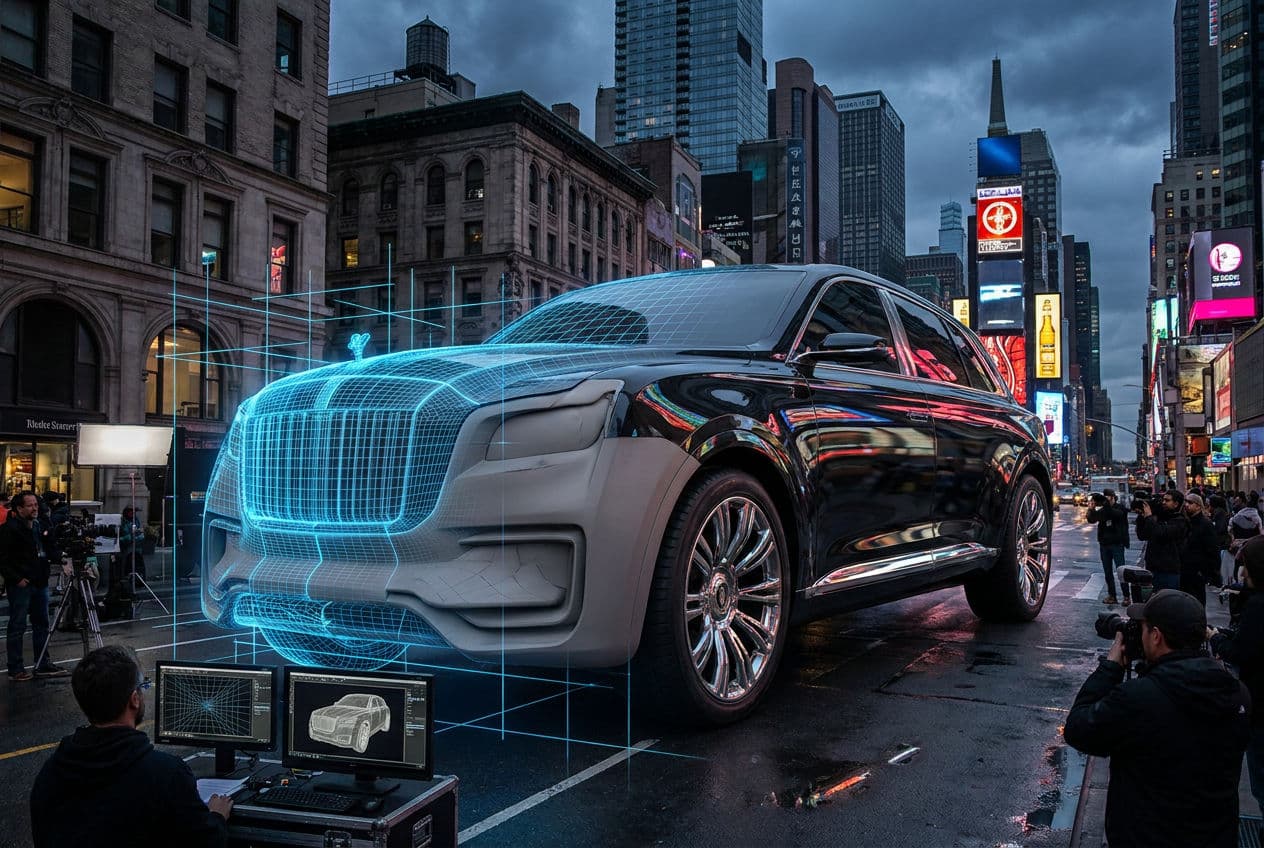
Voici le contre-intuitif, et c'est sans doute le plus important de ce guide. Un bon FOOH ne cherche pas à en mettre plein la vue avec de la 3D. Au contraire. Il doit sembler vrai à 90 %, et ne garder que 10 % d'impossible : l'objet géant, le mouvement irréaliste. Tout le reste, la lumière, le grain de l'image, le léger tremblement de la caméra, les passants, les reflets sur le bitume mouillé, doit être d'un réalisme absolu.
C'est là que la plupart des FOOH ratés se trahissent. Dès que ça « sent le rendu », le cerveau décroche et l'effet s'effondre. Modéliser un sac de dix mètres, beaucoup de studios savent le faire. Le poser dans une vraie rue pour que personne ne sache, pendant une seconde, si c'est réel, c'est un autre métier.
Le faux panneau doit être crédible avant d'être spectaculaire. L'illusion d'abord, l'effet ensuite.
Combien coûte un FOOH
Pas de tarif unique, car tout dépend de la complexité de l'objet, du décor et du niveau de finition. En ordre de grandeur, une campagne FOOH va de 4 000 € pour un test simple à 200 000 € pour une plateforme de marque multi-villes, avec un cœur de marché entre 10 000 et 40 000 €. Une fortune comparée à une vidéo amateur, une paille comparée à une semaine d'affichage premium dans une capitale. Et contrairement à l'OOH, cet investissement produit un asset réutilisable : un modèle 3D bien construit se décline ensuite en plusieurs scènes, formats et marchés.
Quand le FOOH est une bonne idée (et quand il ne l'est pas)
Le FOOH brille pour un lancement produit, un moment de marque fort, une activation réactive autour d'un événement. Il fonctionne particulièrement bien dans le luxe, la beauté, la mode et le sport, où l'objet lui-même est désirable et photogénique.
Il est moins pertinent quand le message est complexe, rationnel ou réglementé, ou quand la marque n'a pas d'objet « héroïsable ». Et un dernier garde-fou : le FOOH est un format, pas une stratégie. Enchaîner les faux panneaux sans idée derrière, c'est le meilleur moyen de lasser, vite.
Le rôle d'un studio, et la place de l'IA
Un FOOH réussi repose sur trois compétences rarement réunies : la modélisation 3D photoréaliste, le compositing (l'art de fondre le faux dans le vrai), et une vraie direction artistique pour choisir le bon objet, le bon lieu, le bon mouvement. C'est un travail de studio, pas de filtre.
Et l'IA dans tout ça ? Chez Digiteyes, elle intervient en amont : explorer des intentions, tester des ambiances lumineuses, dégrossir un univers avant de lancer la production 3D. Elle accélère la réflexion. Mais le rendu final, celui qui doit tromper l'œil une seconde de trop, reste façonné image par image par des artistes. C'est ce qui sépare un FOOH premium d'un contenu de masse vite oublié.
Questions fréquentes
- ◆Qu'est-ce que le FOOH exactement ? Le FOOH (fake out-of-home) est une fausse publicité extérieure créée en images de synthèse : un objet ou un affichage géant intégré à un lieu réel, diffusé en vidéo sur les réseaux sociaux. Le but est la viralité organique, sans achat d'espace publicitaire.
- ◆Combien coûte une campagne FOOH ? Selon la complexité 3D, le décor et la finition, un FOOH va de 4 000 € pour un test simple à 200 000 € pour une plateforme de marque multi-villes, avec un cœur de marché entre 10 000 et 40 000 €. C'est sans commune mesure avec le coût d'une semaine d'affichage physique dans une grande ville, et le modèle 3D produit reste réutilisable.
- ◆Le FOOH est-il légal ? Oui, tant que la scène est clairement une création et non une affirmation trompeuse sur un emplacement réel. La transparence est aussi une bonne pratique : signaler qu'il s'agit d'un contenu de synthèse protège la marque et s'inscrit dans les exigences de marquage des contenus générés qui se généralisent en Europe.
- ◆Quelle différence entre FOOH et OOH ? L'OOH est de l'affichage extérieur réel (panneaux, abribus). Le FOOH en reprend les codes mais tout est fabriqué en CGI et diffusé en ligne. L'un se mesure en passages devant un panneau, l'autre en vues et partages.
- ◆Combien de temps pour produire un FOOH ? Une à deux semaines pour un test simple, deux à quatre semaines pour un asset unique, jusqu'à deux mois pour une série multi-villes, selon l'ambition du projet : modélisation de l'objet, intégration au décor, compositing et finition. La phase de direction artistique en amont est déterminante pour ne pas perdre de temps en production.
Un projet de FOOH en tête ?
Digiteyes conçoit des FOOH et de la CGI premium pour les marques et les agences les plus exigeantes, de l'idée au master. Parlons de votre objet, de votre lieu, de votre moment : contact@digiteyes.fr .